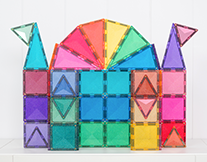
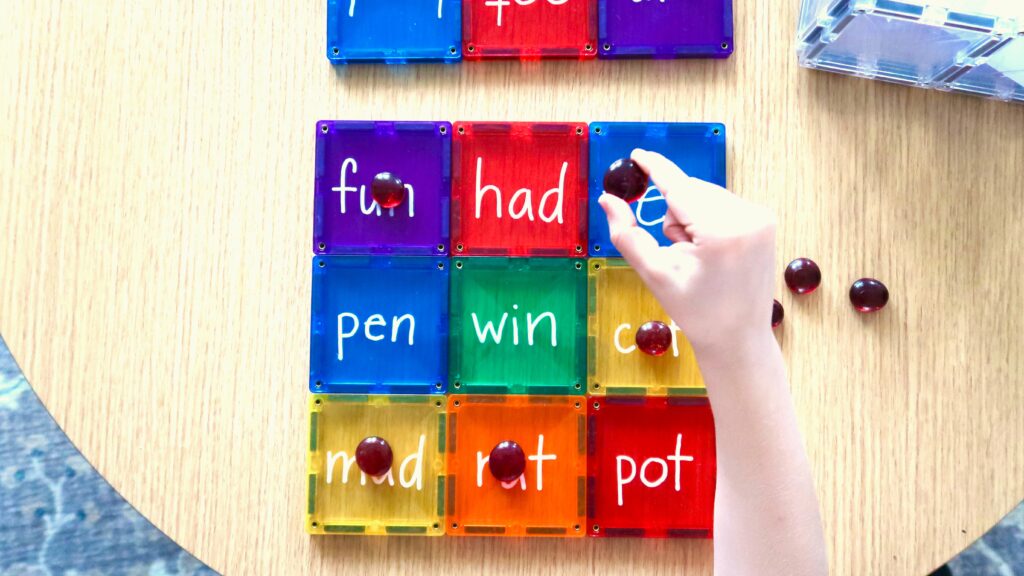
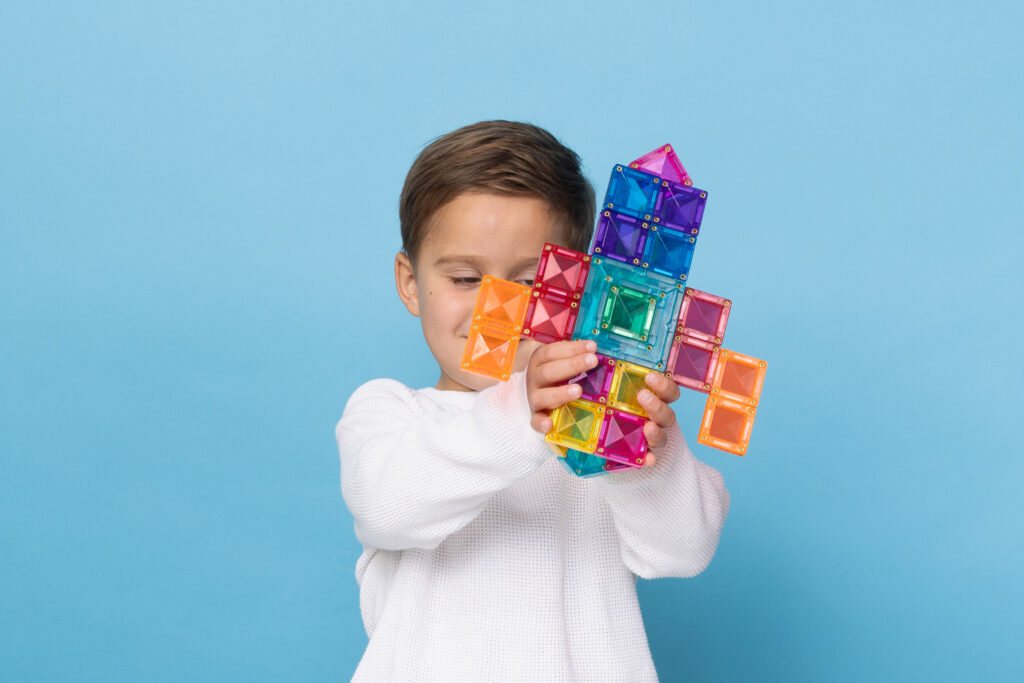
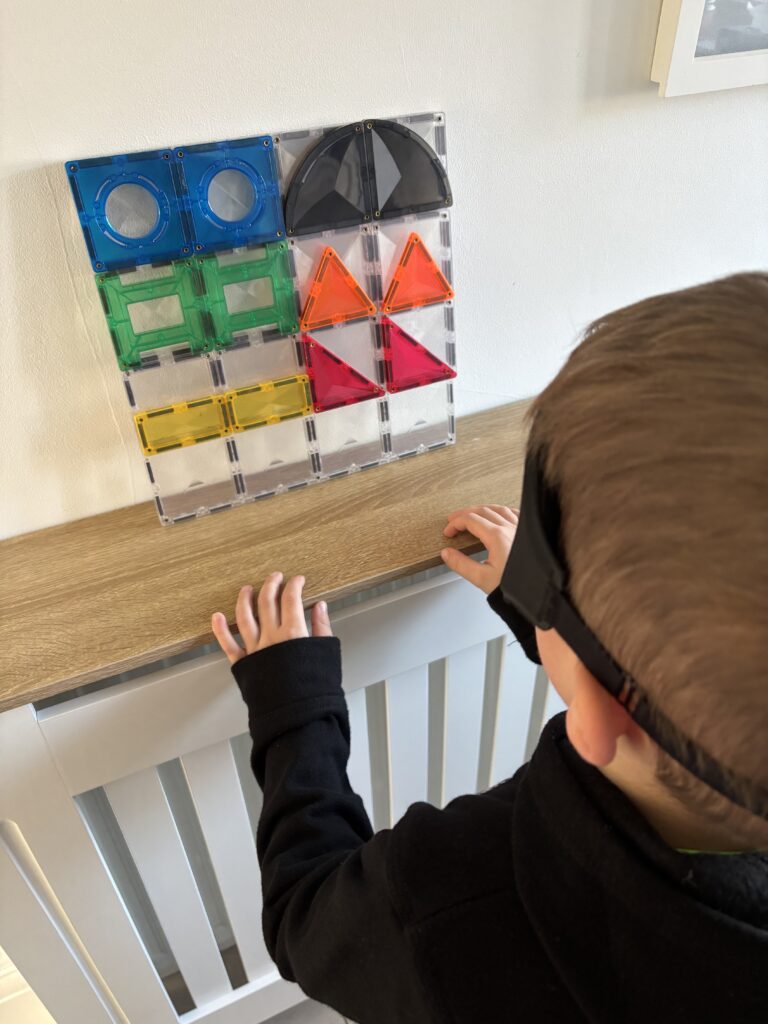
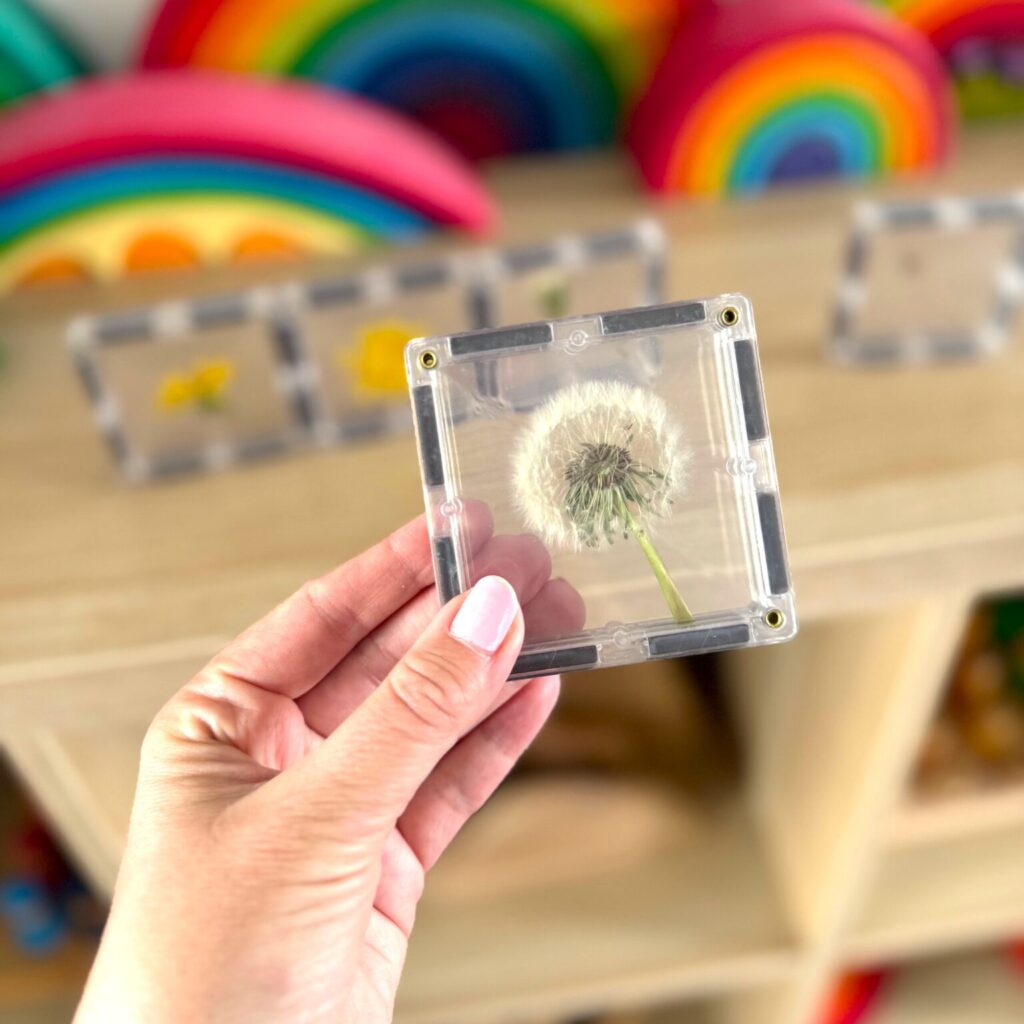
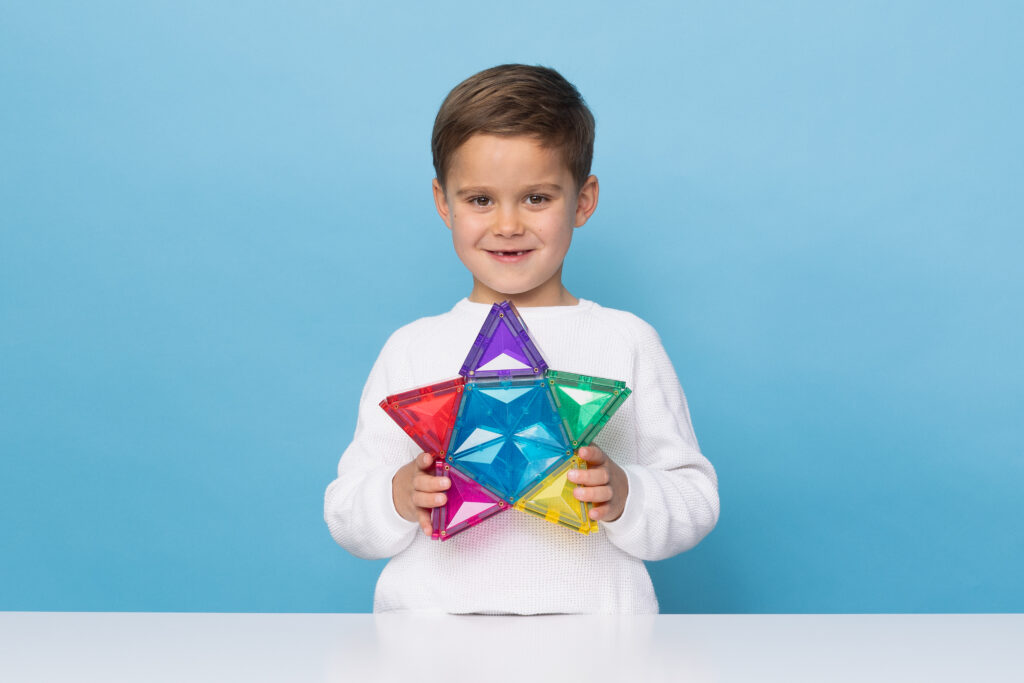
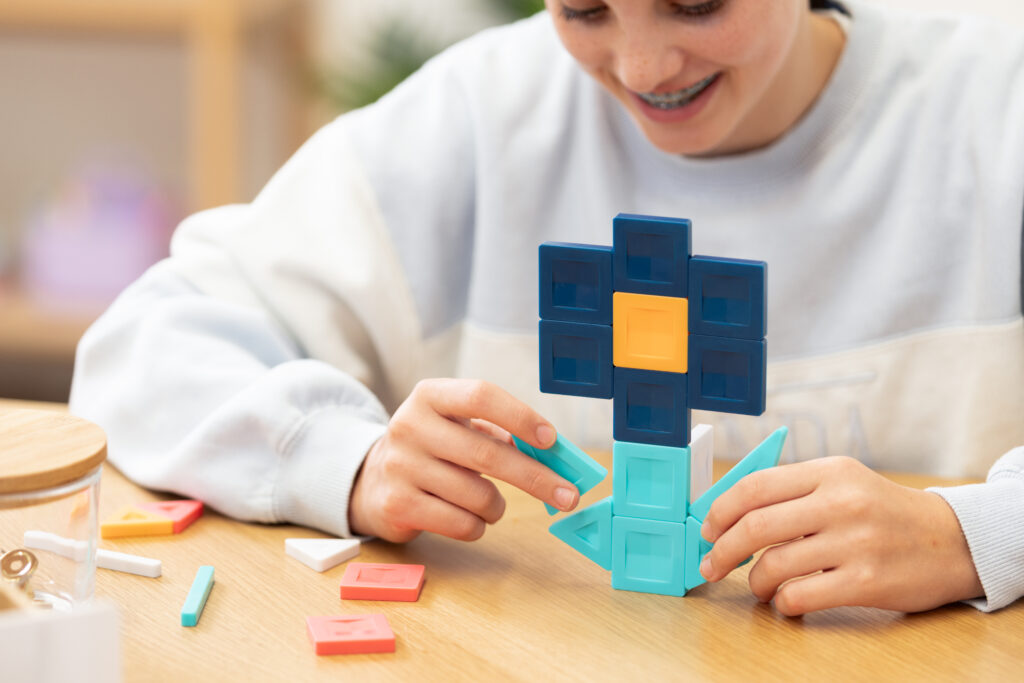
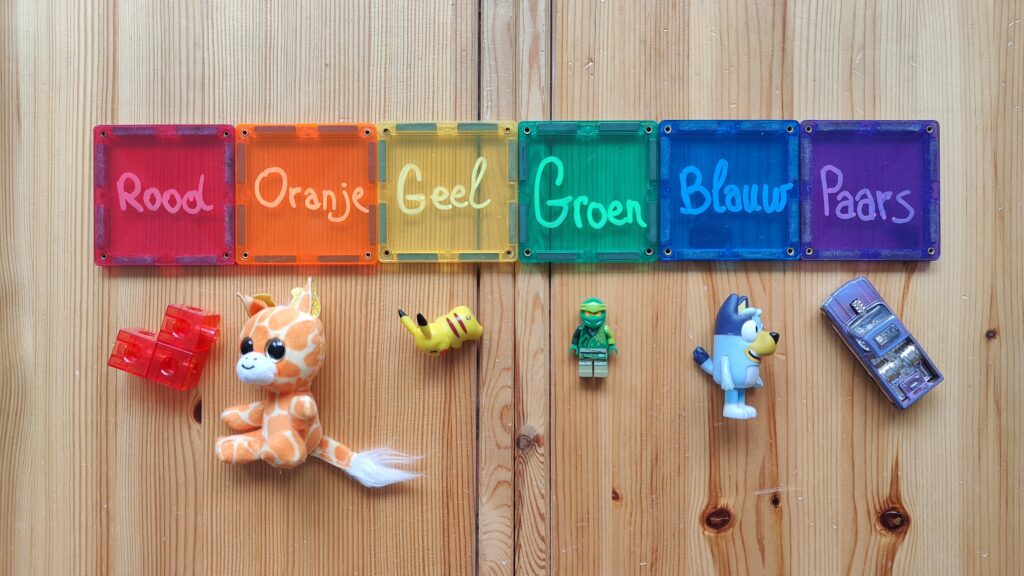
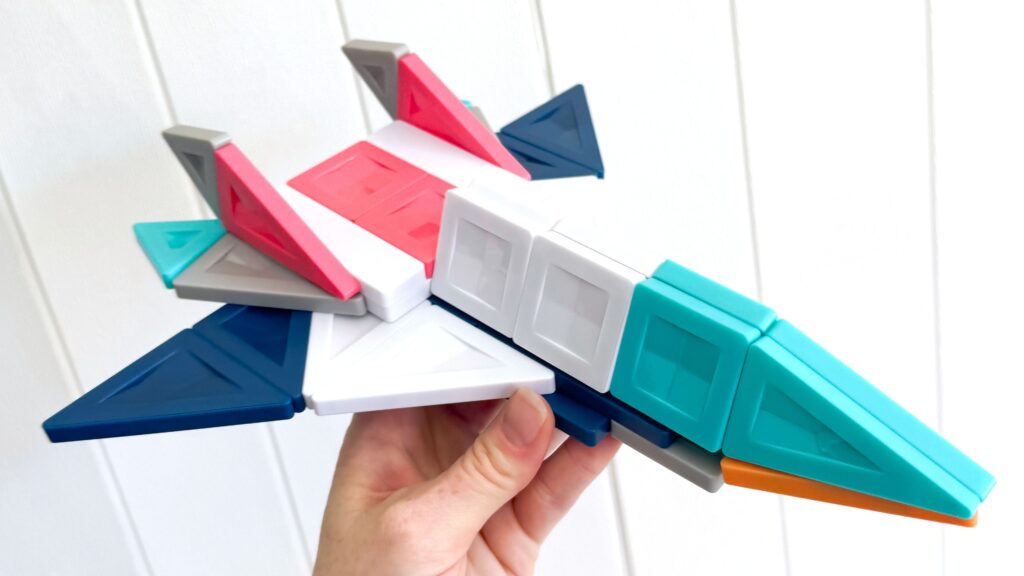
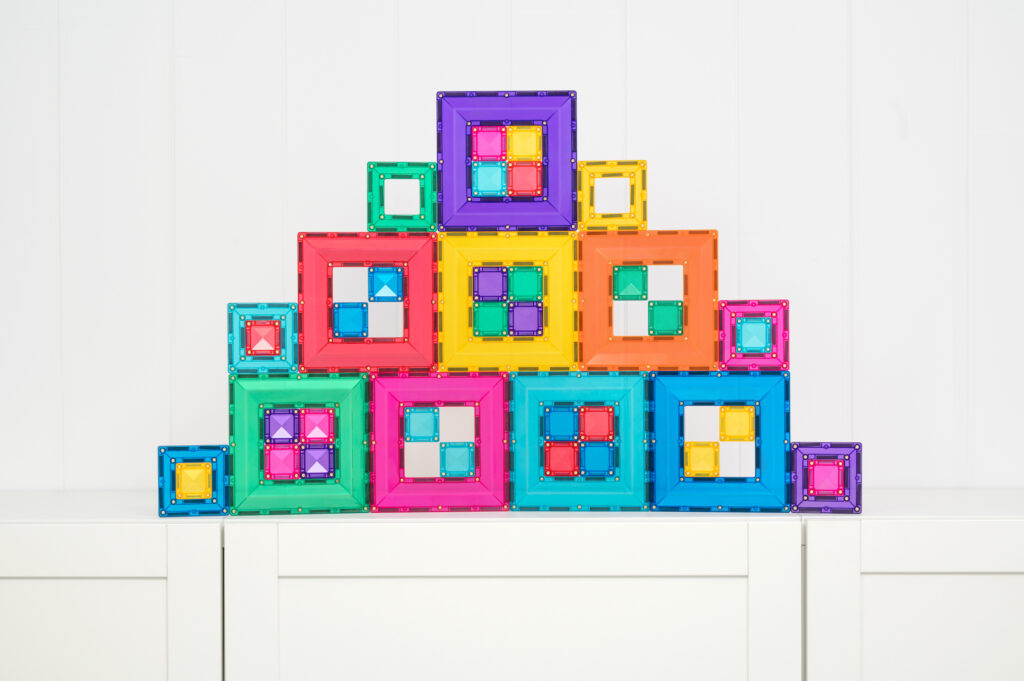
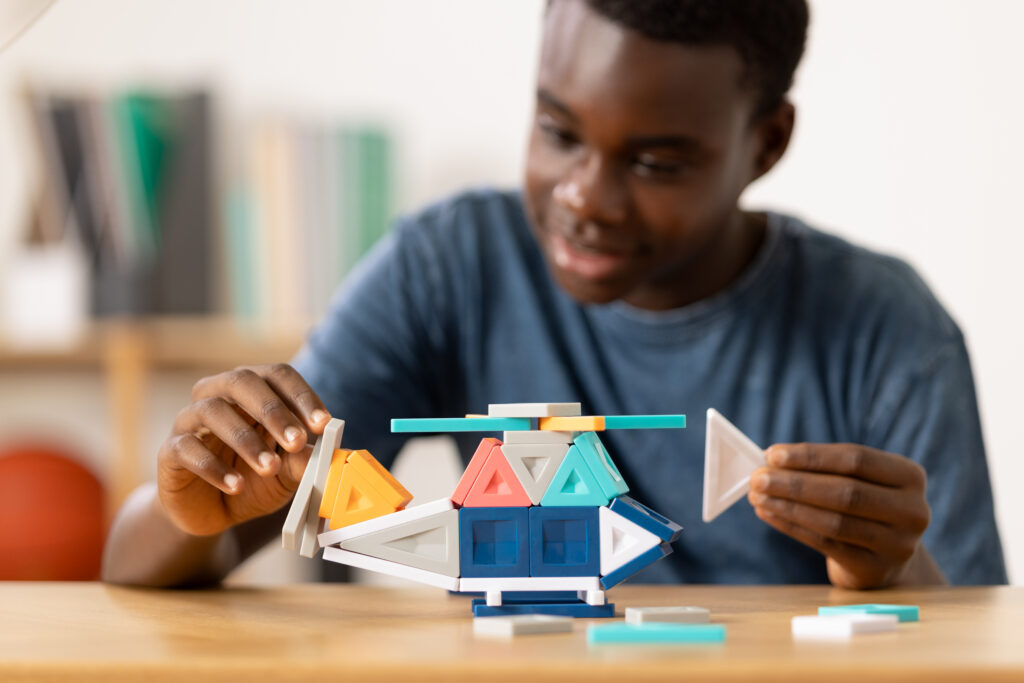
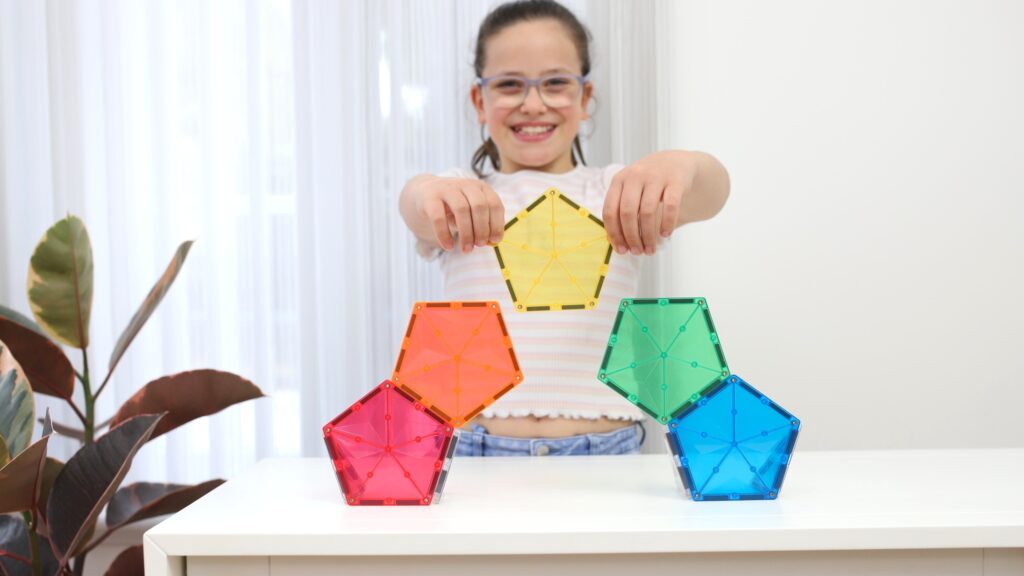
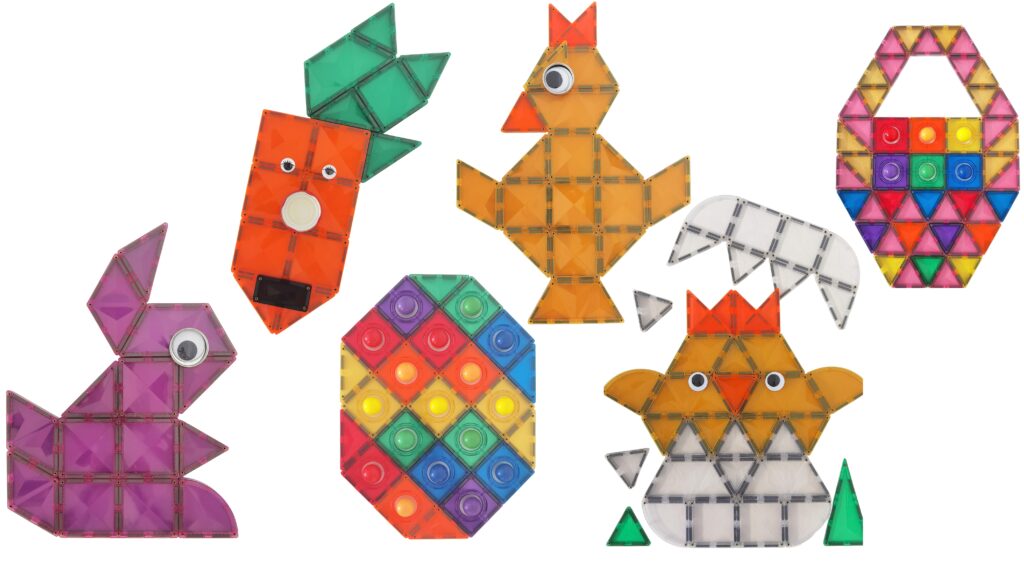
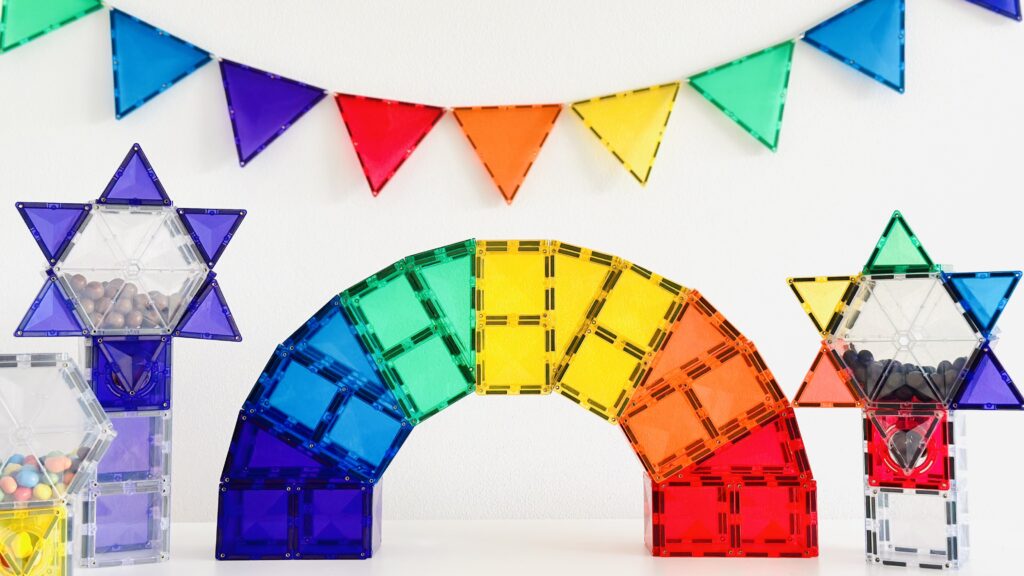
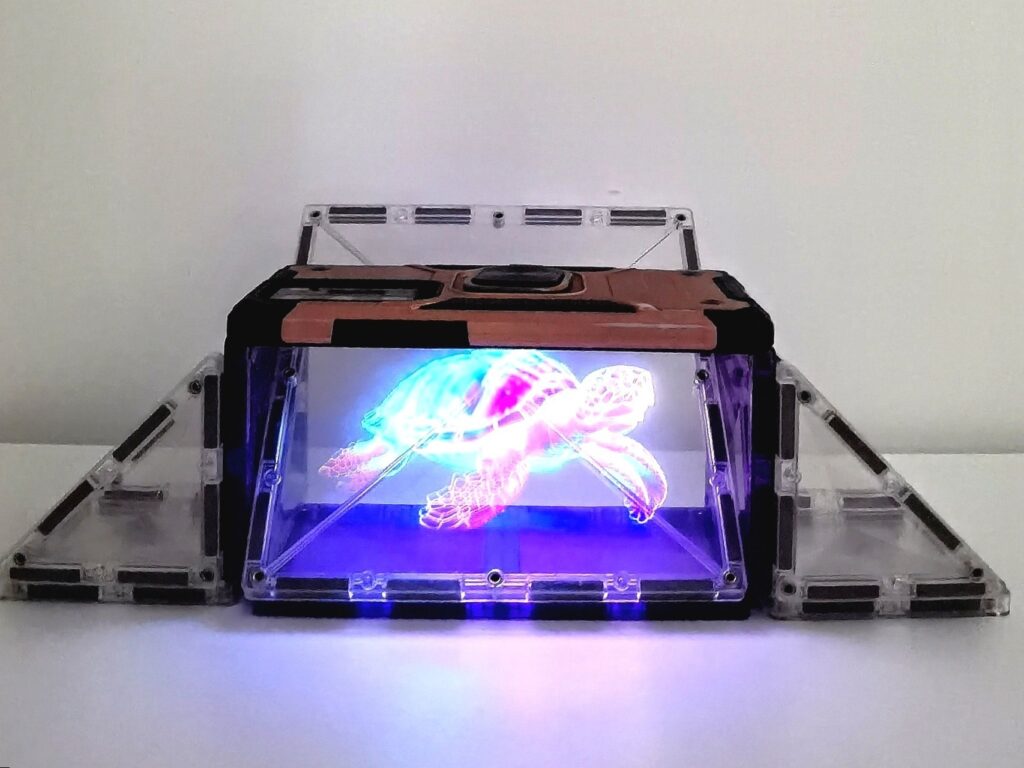
Play and open-ended materials are a winning combo when it comes to entertainment, education and overall early childhood development. CONNETIX offers endless possibilities with their magnetic tiles and paired with their free resource cards there are even more opportunities for play and development!
Whether you’re looking for an activity to leave out for smoother mornings, low-prep quality time ideas or activities to support literacy development, there are options for everyone! Choose from uppercase and lowercase alphabet cards, numbers, holidays, animals and more! Print the cards on standard 8.5”x11” printer paper or print multiple pages on one sheet to create smaller cards.
Let’s get you started with a few different alphabet activities to get your ideas flowing!
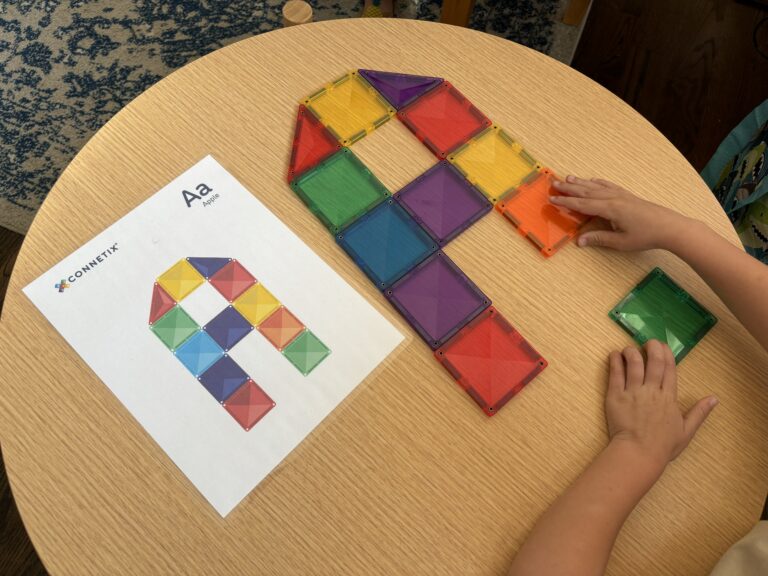
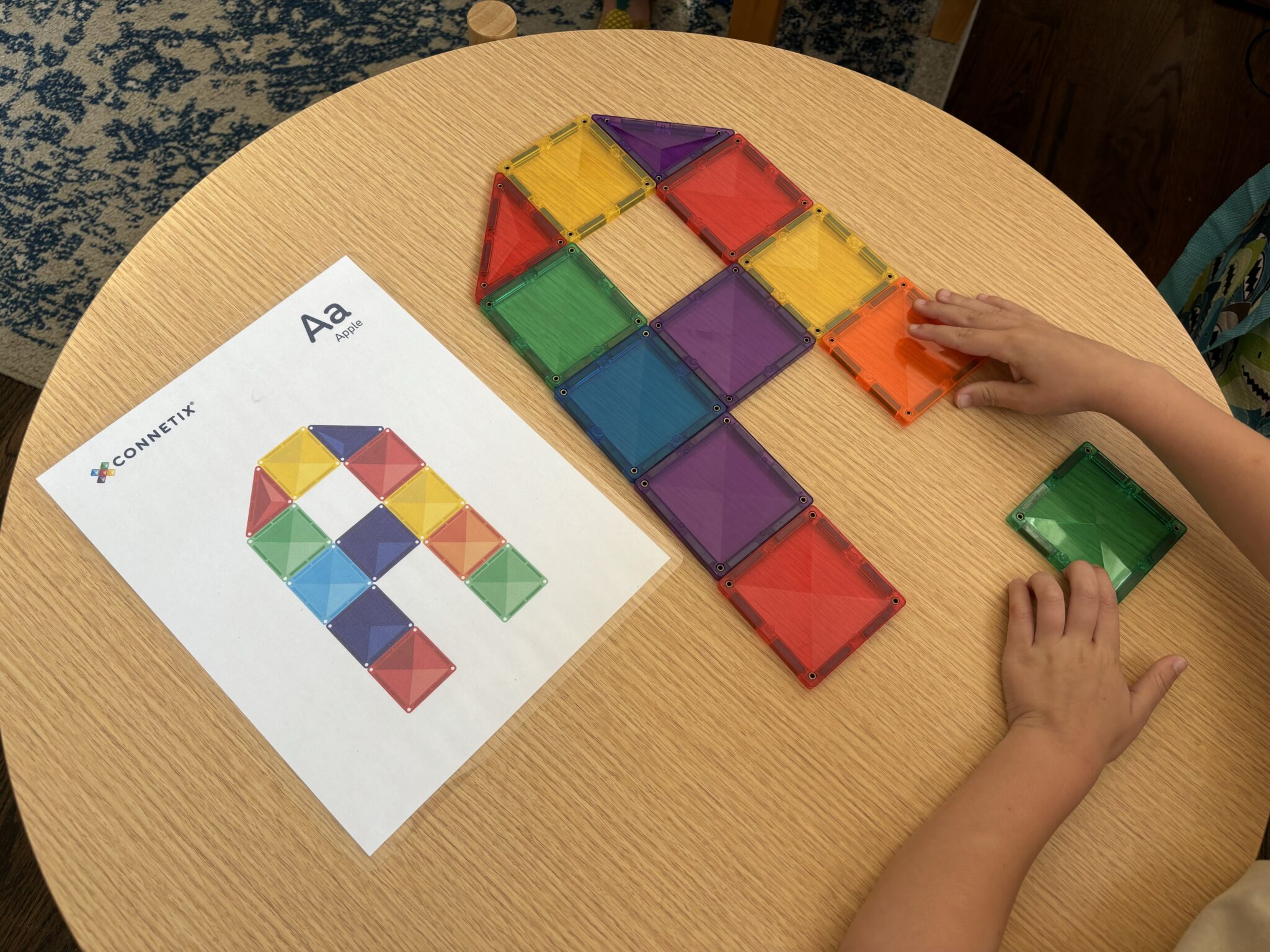
1. Build Letters for Better Understanding
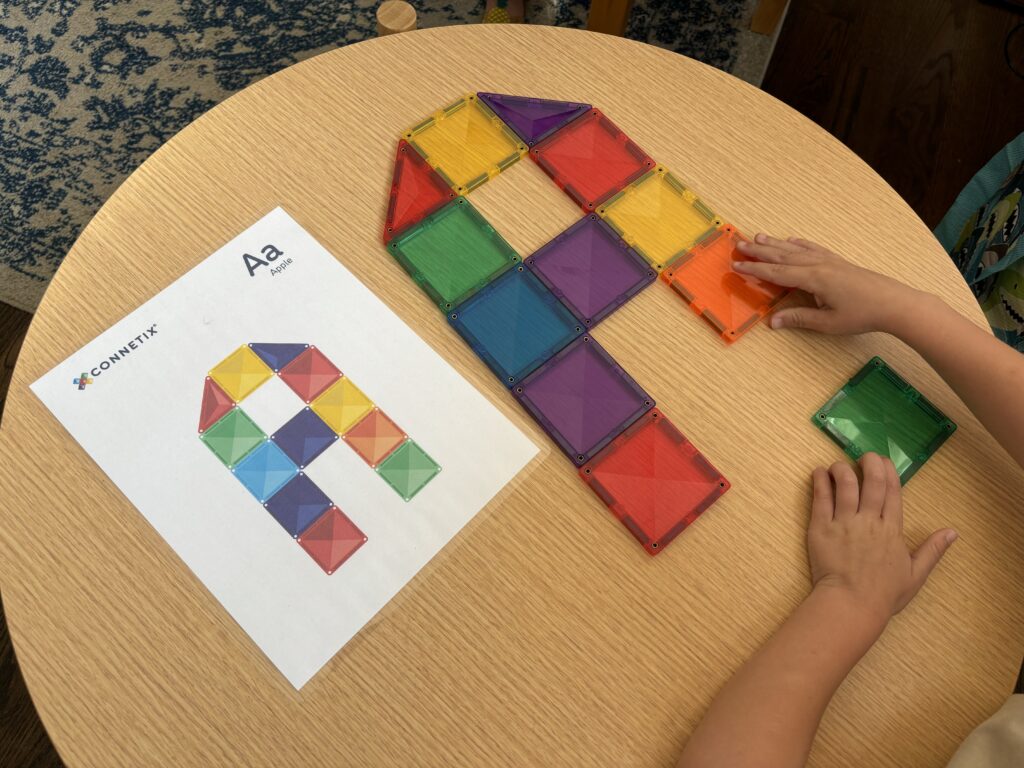
Letter names and sounds are the root of all reading and writing; both identification and formation. Repetition and multi-sensory learning are key contributors to this new information being understood and absorbed for future use. By building letters piece-by-piece, more time is spent on the letter with attention to detail.
Materials:
- Alphabet cards
- Tiles pictured specifically needed for individual letters
Setup:
You can easily make your setup work for different stages of mastery by adjusting the tiles you set out with the letter cards. For more simplicity, place only the exact shapes and number of tiles needed for each letter build. For more independence, leave out multiple quantities and shapes allowing your child to choose what they need.
Implementation:
After setup, invite your child to come build with you (if they aren’t already interested in what you’re doing)! A simple, “Look at these new CONNETIX cards” should do the trick! Incorporating them into your home education routine? Share that you found a fun, new way to work on letters! After sharing the cards, give your child a moment to see what they come up with on their own. If needed, model how to build letters by referencing the cards and beginning the letter for them.
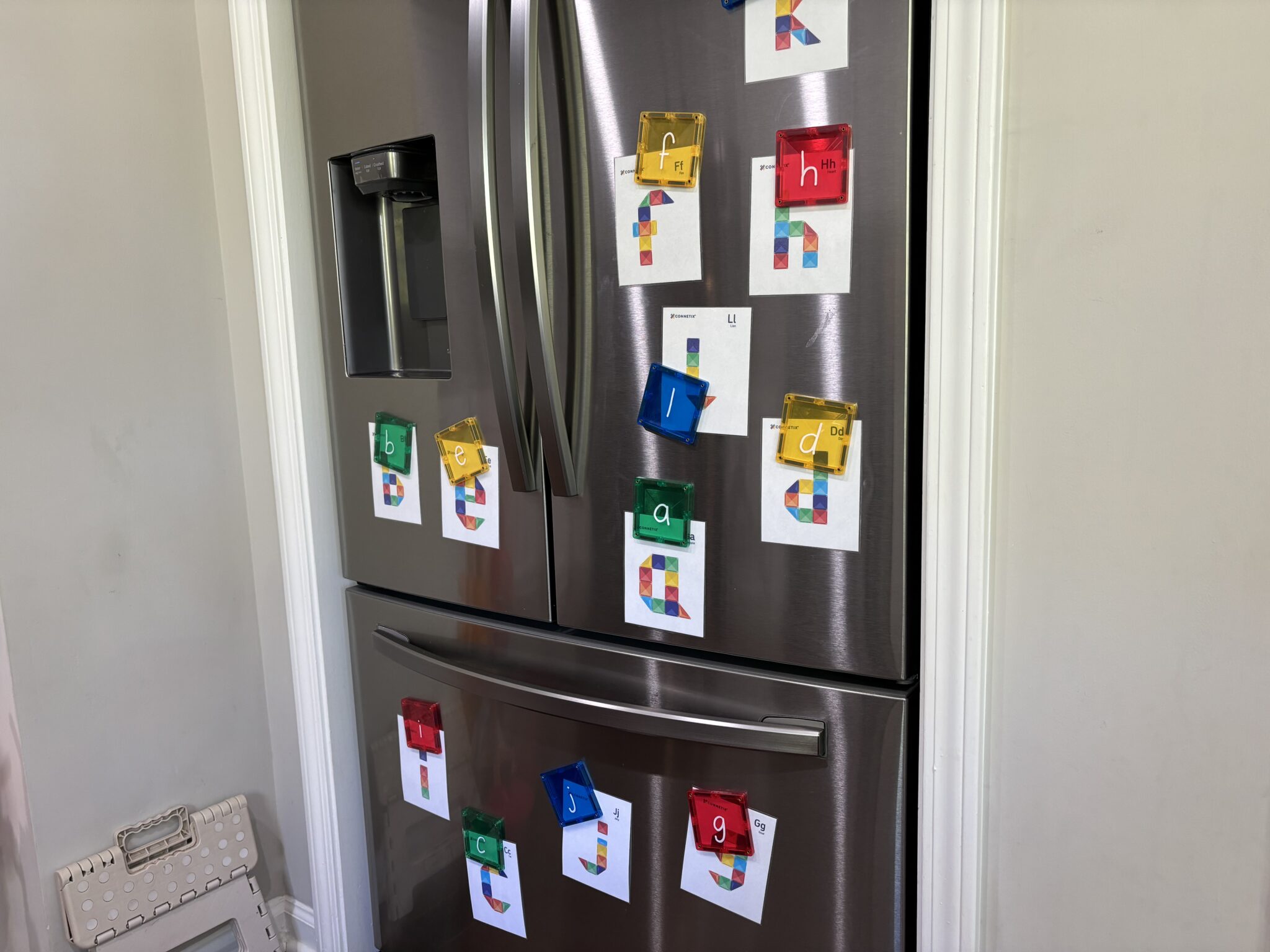
2. Fridge Match
If your little one plays well on their own, but wants you to be in the same room with them, then this one is for you! With a little prep work, you can get breakfast made (or maybe just enjoy your coffee hot) while your child learns through play!
Materials:
- Alphabet letter cards
- Any tiles of your choice (as many as the amount of cards you are using)
- Chalk marker (or masking tape and a marker)
Setup:
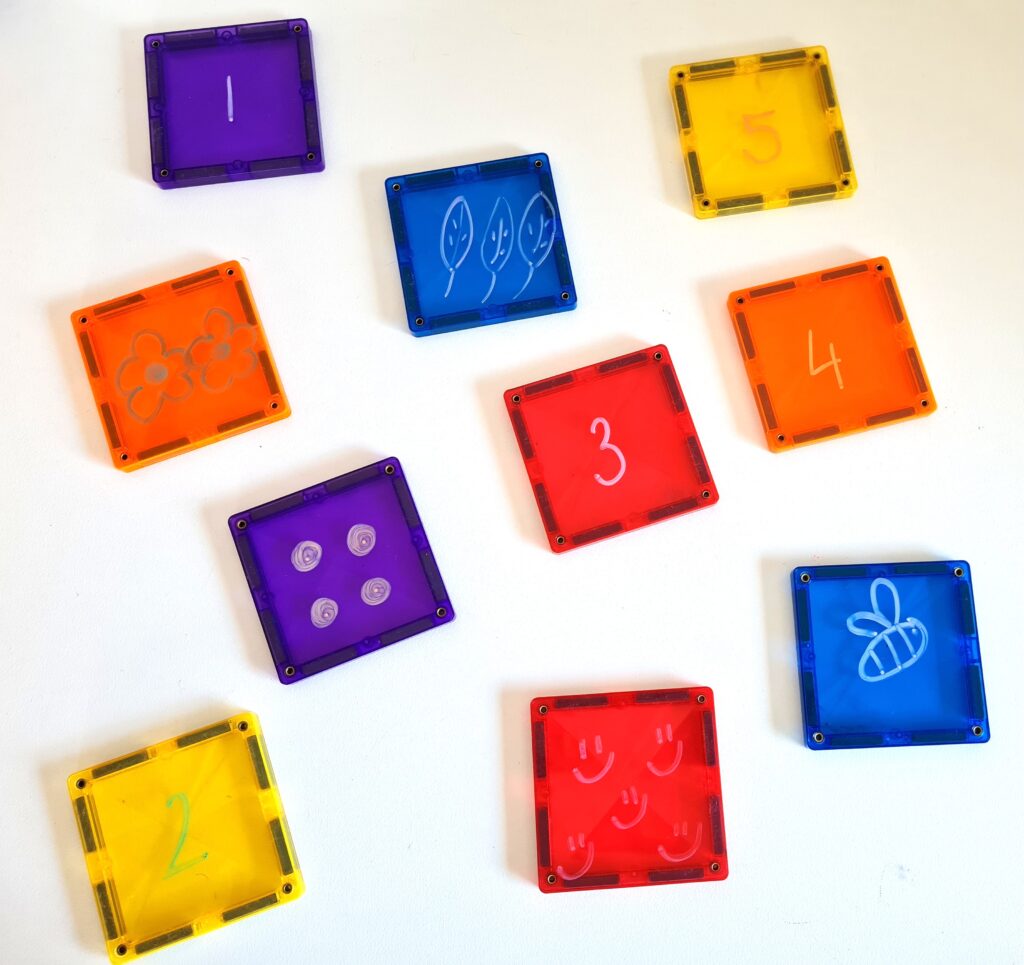
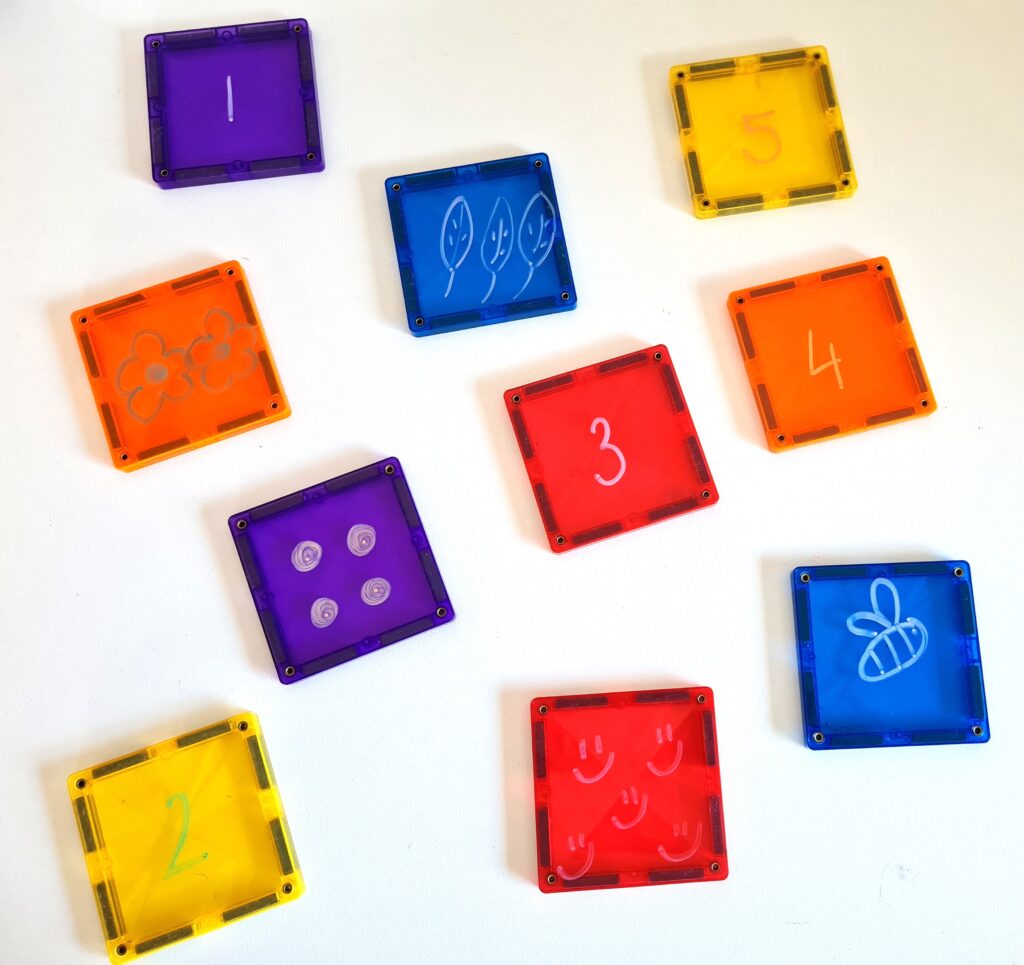
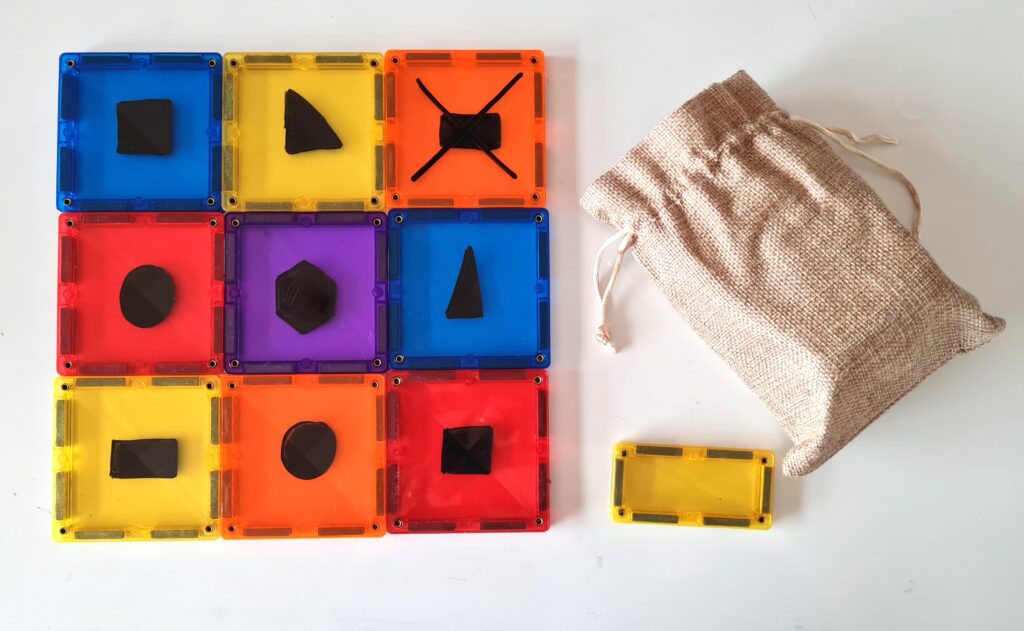
Prep the tiles by writing the letters you are focusing on for each tile and spread out on the fridge ensuring your little one can reach them. Have the corresponding letter cards printed and ready nearby.
Implementation:
There are a few ways you can do this. If you prefer the activity be stumbled upon and worked on whenever your child likes, leave the stack of cards close to the fridge and place one of the letter cards under the corresponding magnet to model the activity. The same thing will work if you’re busy in the kitchen and want to have the activity ready-to-go. If you want to invite your child to come and work on the activity you can say something along the lines of, “Did you see these new magnets on the fridge?” A statement like, “Wow, look at these!” is sure to get them running over.
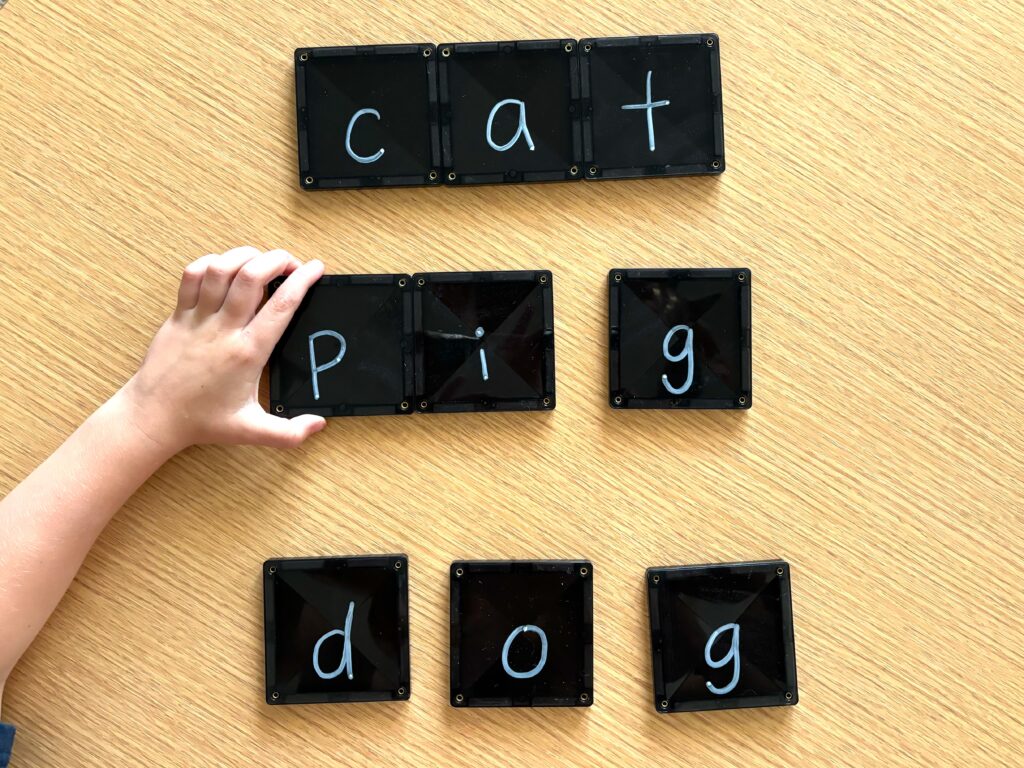
This matching activity can cover a range of skills when working with the alphabet: uppercase to uppercase, lowercase to lowercase, and uppercase to lowercase.
3. Beginning Letter Match
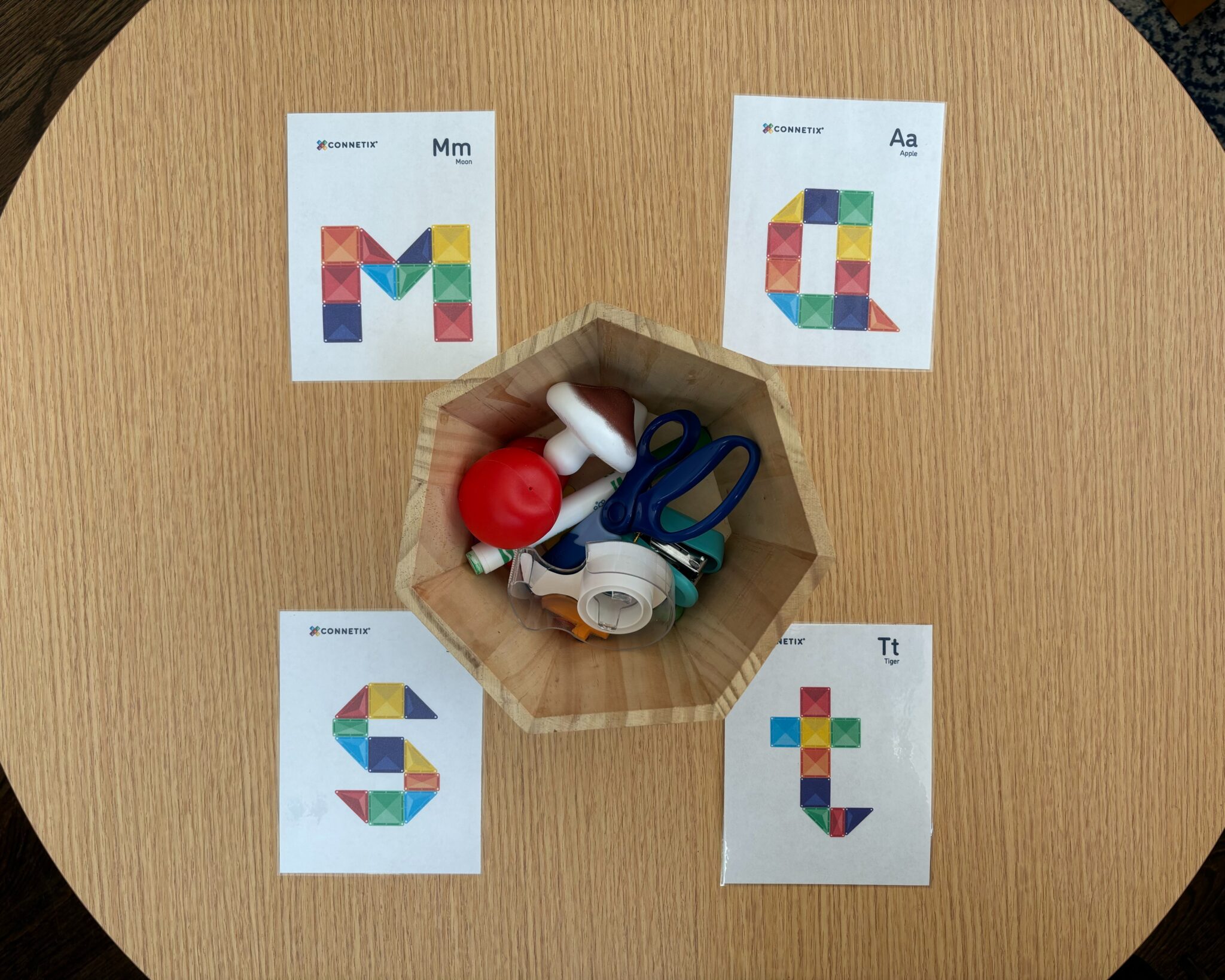
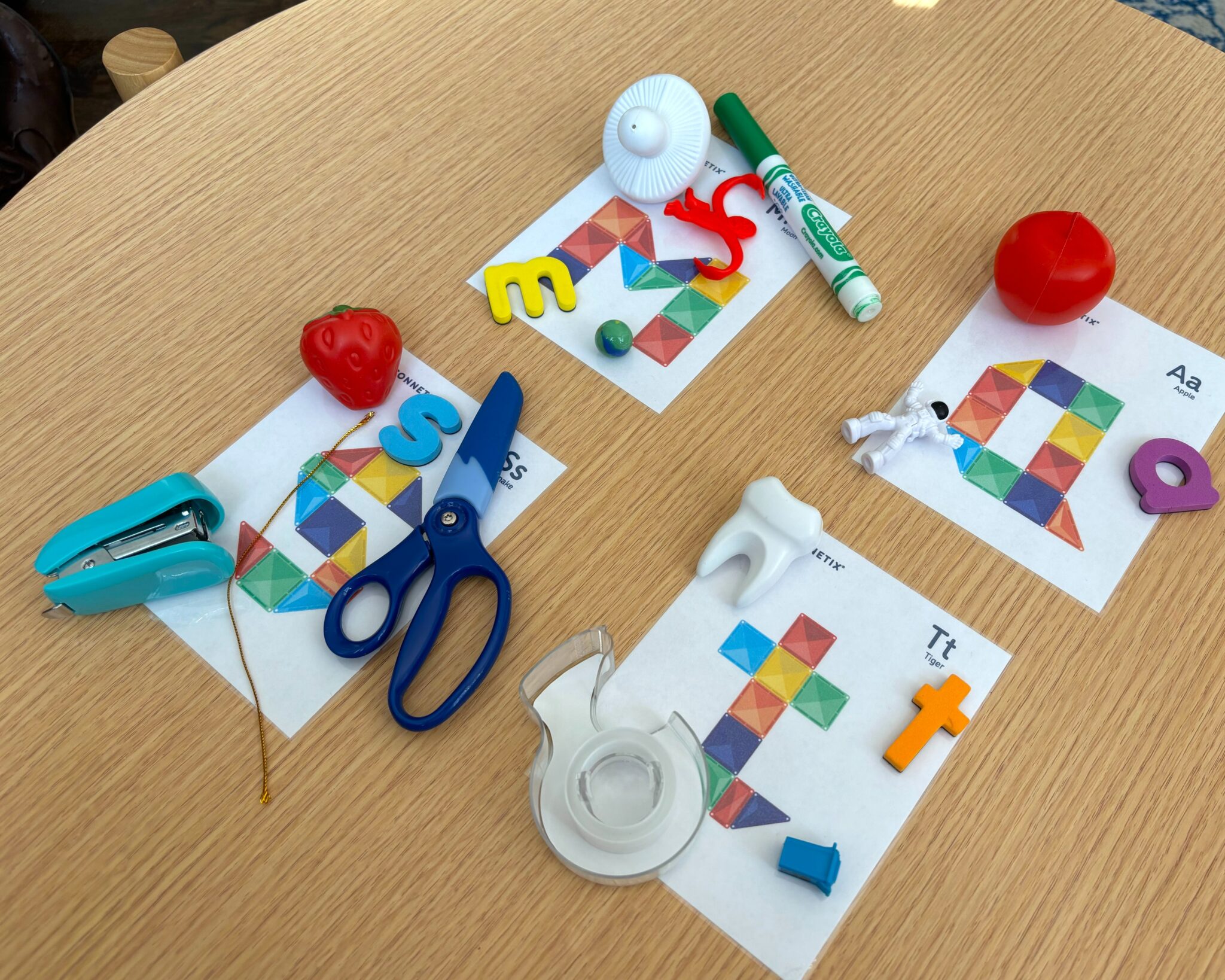
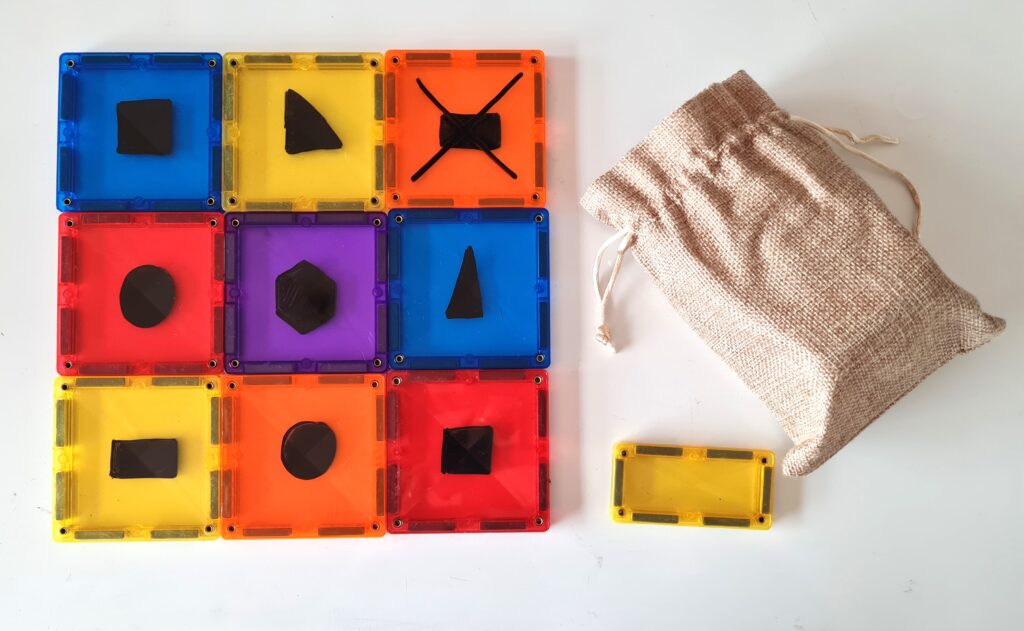
Here’s a great way to pair the cards with items you already have in your home for an effective and engaging literacy activity!
Materials:
- Alphabet cards
- Small items around your home that your child is familiar with and starts with each of the letters (TIP: Choose items that use the letter’s main sound like a toy octopus for “Oo” instead of an orange).
Setup:
Place the small items in a container or on top of a table. Spread out the letter cards.
Implementation:
Share with your child the container of small items and allow them to browse through it. Tell them, “We are going to sort, or separate, these items based on the first sound we hear in its name.” Choose one of the items to demonstrate. “This is a marker /m/. Marker starts with the letter m.” Then place the item on or under the letter m card. Ask your child to try.
This matching activity can cover a range of skills when working with the alphabet: uppercase to uppercase, lowercase to lowercase, and uppercase to lowercase.
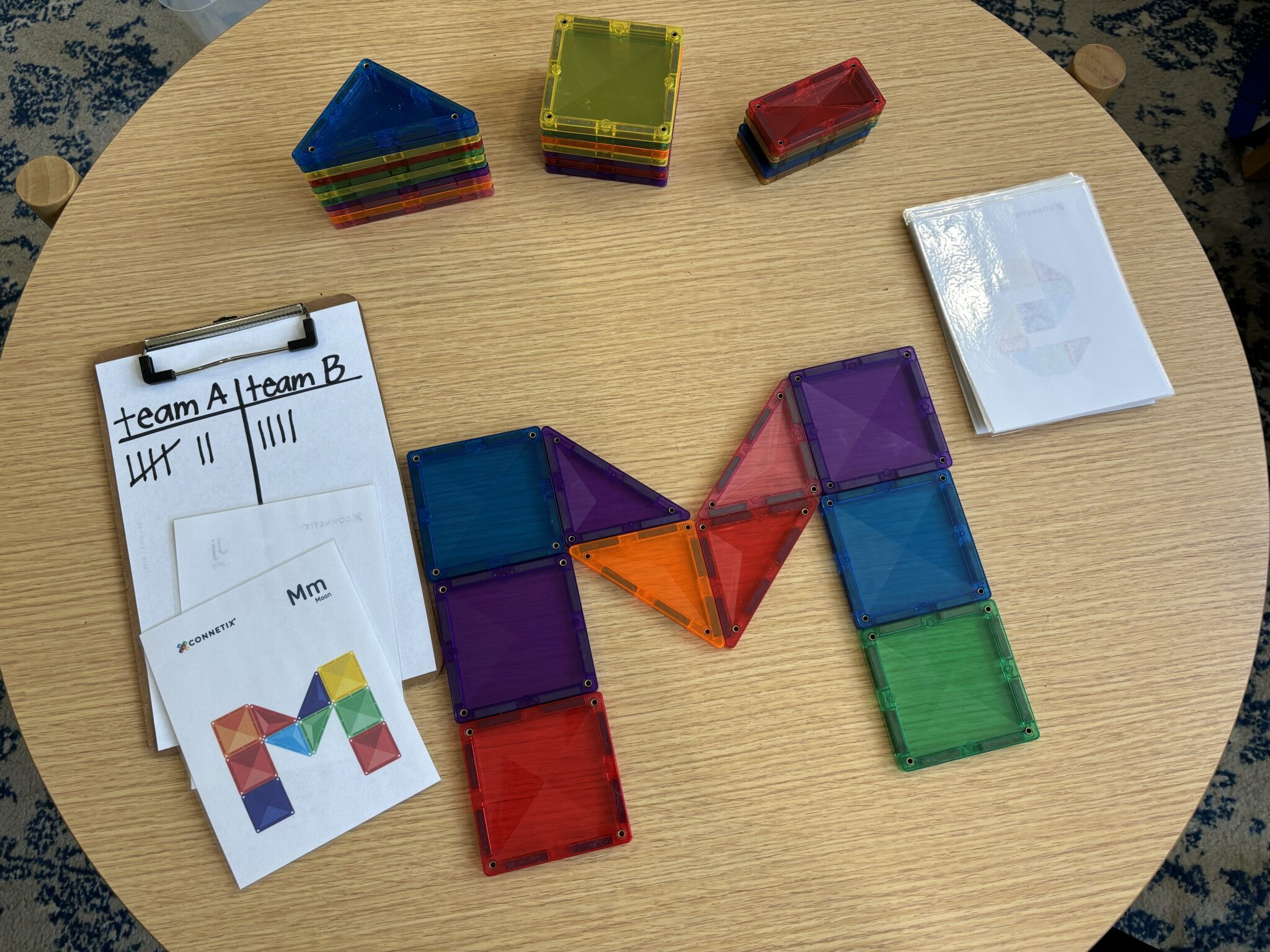
4. Letter Building and Guessing Game
This one is similar to the first activity where we build letters for better understanding, except this time we are turning it into a fun, multiplayer game! I suggest this after your child has become more comfortable and fluent with letter identification because of the nature of this game. This game works best with four or more players, but you and your child can adapt it and work together as well.
Materials:
- Letter cards
- The tiles needed to complete each letter
- A timer
- Something to keep score with
- A divider or something to cover the card with
Setup:
Use a surface that will give you enough room to build and have your cards and tiles accessible. Lay the card stack face down on the table and create teams of two people.
Implementation:
One player from each pair will be the builder and the other will be the guesser. After the timer begins, the builder will flip the letter card ensuring their partner doesn’t see it, then will cover it as they build. It’s the guesser’s job to name the letter their partner is building. It is okay if the letter is named once the builder has completed the letter, but as it is a time-sensitive game you want to guess the letter early if you can. At the end of the turn, count how many letters were guessed correctly then write it on the score sheet. Then it is the next team’s turn. Each time a team gets a turn, the builder and guesser should switch jobs.
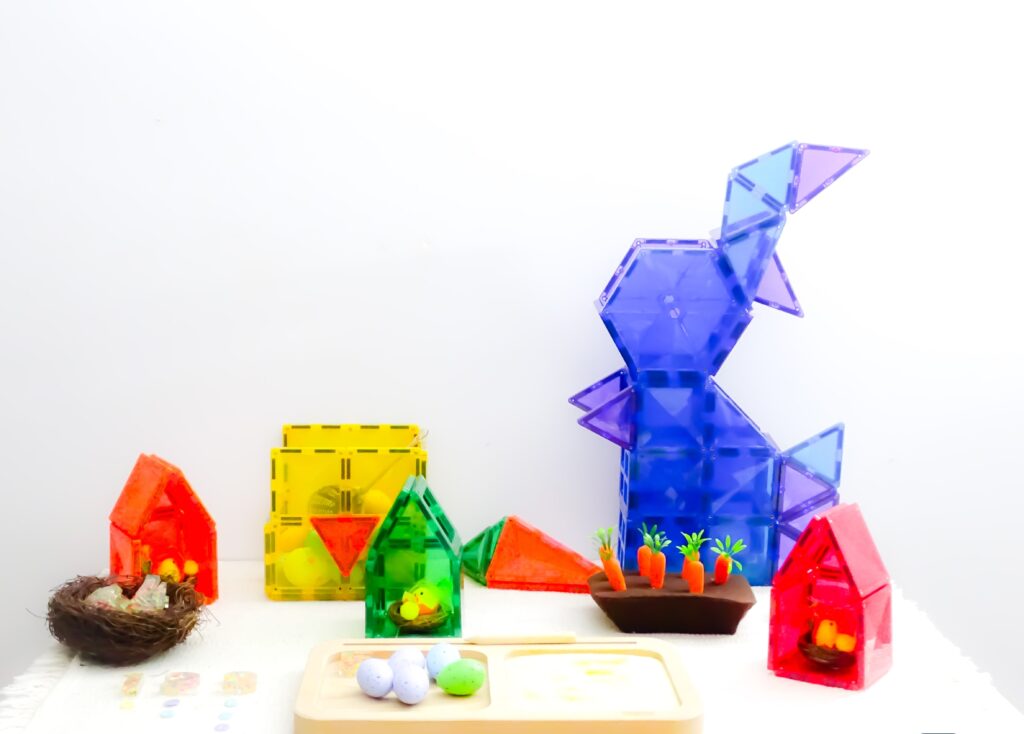
There are so many activities you can create to make learning fun! Other resource cards like the nature category provide a great way to gather and talk about different things we may come across, like flowers and acorns. If your little one is interested in space, they have a satellite card and more; perfect for introducing new vocabulary. The possibilities are endless with open-ended materials, new resources, and a little imagination!