Multiplication
Multiplication is a skill we all use each and every day; whether we’re at the supermarket working out the amount we’re spending on multiple quantities, cooking and making extra batches or building something where we need to work out the number of supplies to order. We really do need to be fluent in our multiplication facts and the strategies we use to solve large equations. Let’s have a look at how using CONNETIX can help your learners become engaged and develop their multiplication skills.
Learning multiplication facts
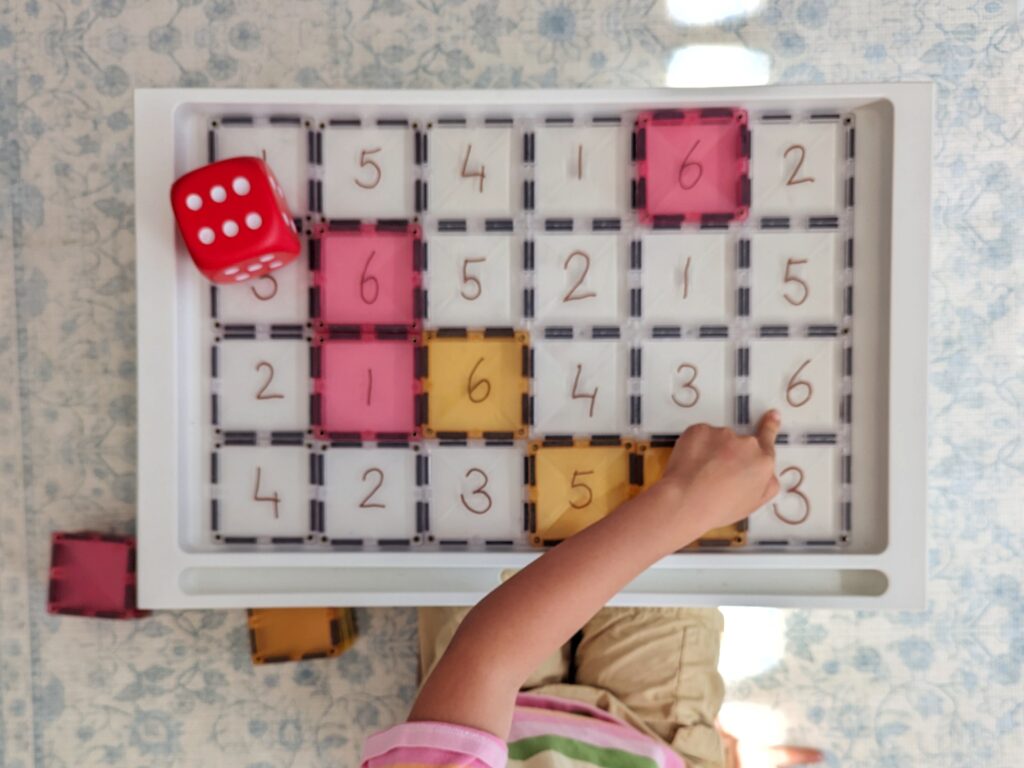
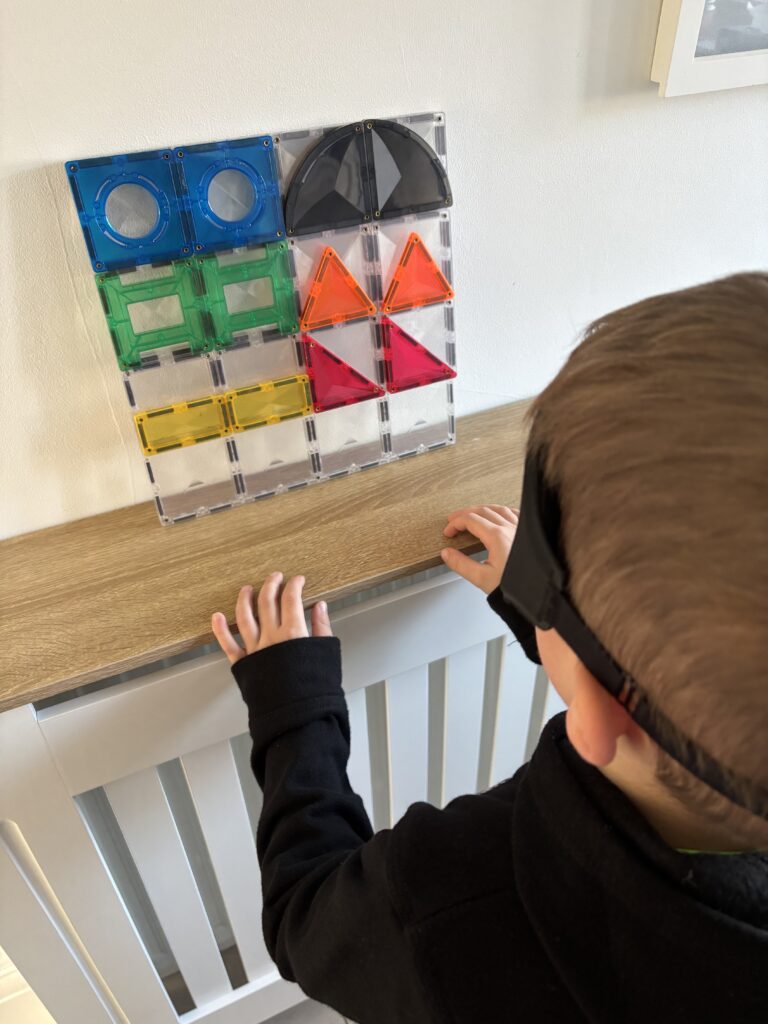
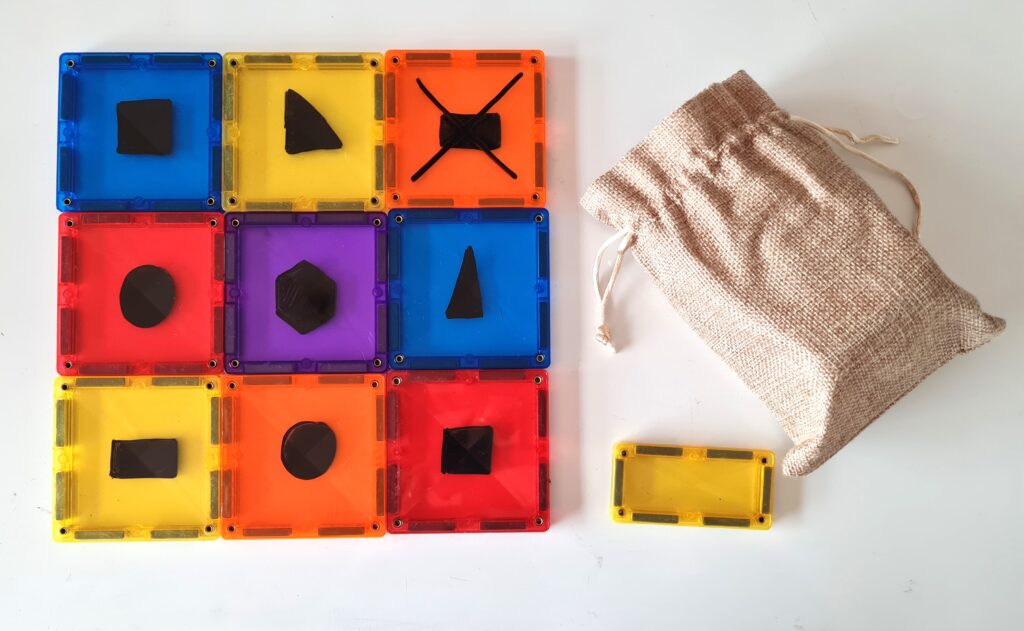
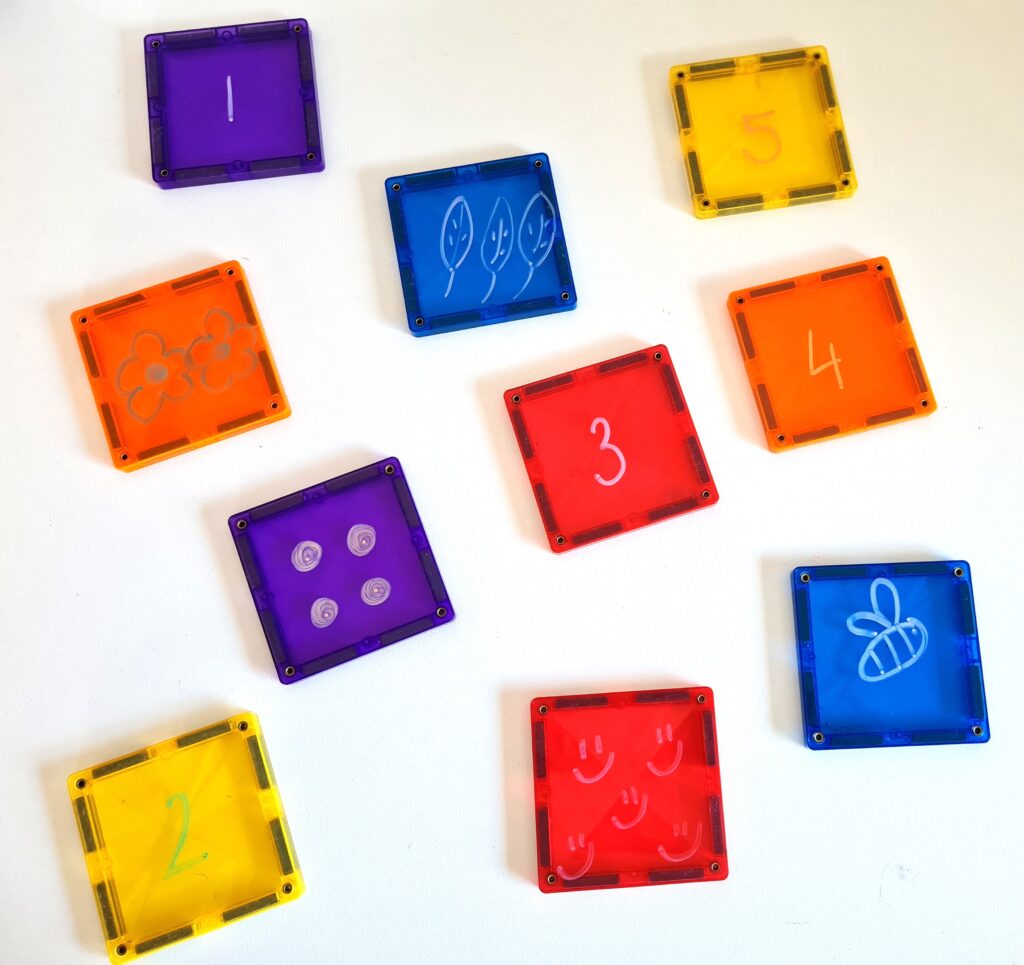
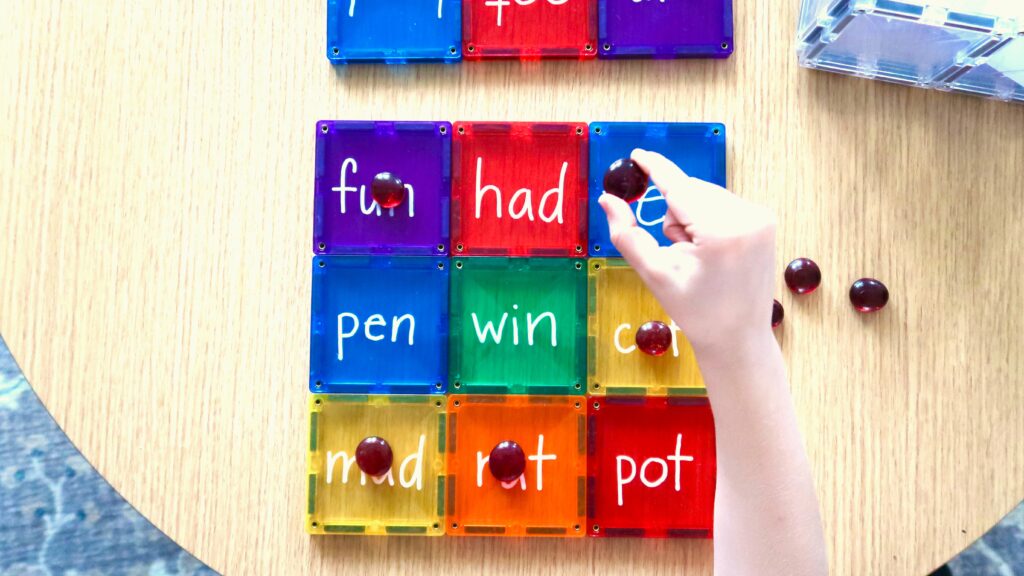
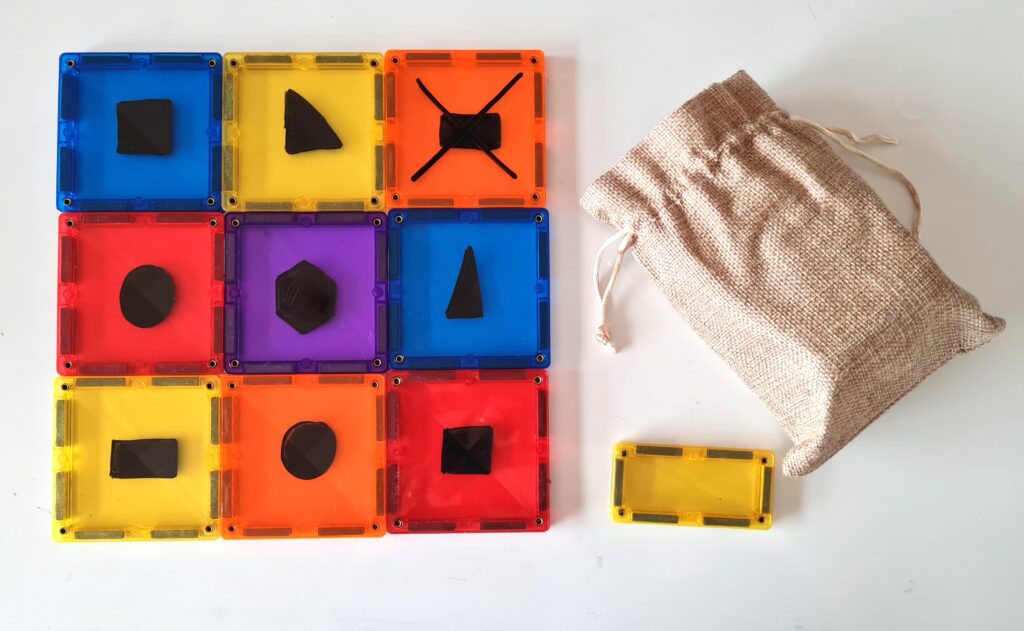
If your learners are still practicing their multiplication facts to help them solve larger multiplication equations, a game like tic tac toe might be fun. Have them identify which times tables they need more practice with, for example, it might be the 6, 7 and 8 times tables. Ask students to create a 3×3 grid with their CONNETIX and choose 9 equations from these to write in. For example, 3×8, 6×7 etc. Then write all the answers for these times tables on a new tile and create a stack. Flip the top tile over, read it and if the child has the multiplication equation that matches they can cross it off their board.Â
Strategies for multi digit multiplication Â
When multiplying larger numbers by one, two or even three digits, we can use different strategies to help solve the equation. Most of us would have been exposed to vertical multiplication but may not have heard about the lattice method or the area/box method. I wish someone had taught me these earlier because they make so much more sense to me! Let me explain. Â
The multiplication area or box method
Let’s use the example 2×34.
- Place two tiles down next to each other horizontally, this is where we will write the answers.
- Add 3 tiles around the outside of the two you first put down, two above and one on the left. This is where you will write the numbers that need to be multiplied.
- Write the digit 2 in the very left tile, in the two top tiles is where we will place the numbers 30 and 4. The first of these boxes will be written as 30 because the 3 here represents 3 tens, the second box will have the digit 4 to represent the 4 ones.
- Multiply the numbers that correspond with each tile (or box). So, we multiply 2×30 and write the answer 60 in the square, then multiply 2×4 which is 8 and write this on its tile.
- Add these two answers together, 60+8=68.
- This can be written down on a large tile or you could take these two tiles and stack them on top of each other like a vertical addition sum, just make sure the place value columns line up. Then solve it this way. And that’s it!
Now, if we make the equation a 2×2 digit, we simply need to add another row below the one we already started with. Let’s use the example 23×34.
- Place four tiles down making a large square, this is where we will write the answers.
- Add 4 tiles around the outside of the four you first put down, two above and two on the left. This is where you will write the numbers that need to be multiplied.
- Write 20 in the first far left box, 3 in the second far left box, 30 in the first box on the top and 4 in the second box on the top.
- Repeat the process of multiplying the numbers that meet in each box. 20×30=600, 20×4=80, 3×30=90, 3×4=12.
- Add all four answers together. 600+80+90+12=782 The process is the same regardless of how many digits are in the multiplication equation.
In this method learners are exposed to the concept of how multiplication is really solved, by multiplying all the individual numbers according to their place value.Â
The multiplication lattice method
We will use the same example as before, 2×34.
- Set your tiles up in the same way as the area/box method by placing two tiles down next to each other horizontally, this is where we will write the answers.
- Add 3 tiles around the outside of the two you first put down, two above and one on the left. This is where you will write the numbers that need to be multiplied.
- Write the digit 2 in the very left tile, in the first tile on the top write the digit 3 and on the second tile on the top write the digit 4. This is where the two methods begin to differ, we don’t need to use place value in the lattice method. We are just multiplying the individual digits.
- Draw a diagonal line through each tile where our answers will be written. The left triangle of each box represents the tens place value column and the right triangle represents the ones place value column.
- Multiply the numbers that correspond with each tile (or box). Multiply 2×3=6, so in the right side of the box we write the digit 6, there are 0 tens so we could write 0 on the left or leave it blank. Multiply 2×4=8 and repeat the process.
- Insert two extra tiles below the bottom row. If you like, you can remove the original multiplying tiles with the digits 2, 3 and 4.
- Starting from the right, add the numbers that sit in each diagonal column, just as we would in traditional vertical addition. First, we add 8 and nothing else, as there’s no other numbers to add. Write this on the tile below the 8.
- We can also forget that we split our tiles into tens and ones as we will be adding.
- Repeat this again by adding the digits in the next column to the left, 0+6=6. Write the answer on the tile to the left of the 8.
- Now you can see the answer is 68 as well!
- If we did have a three-digit answer here we would have needed an extra tile to write this answer on in the final column.
Again, if we make the equation a 2×2 digit, we simply need to add another row below the one we already started with and draw in the diagonal lines. Let’s use the same example as before, 23×34.
- Set your tiles up in the same way as the area/box method by placing four tiles down making a large square, this is where we will write the answers.
- Add 4 tiles around the outside of the four you first put down, two above and two on the left. This is where you will write the numbers that need to be multiplied.
- Write 2 in the first far left box, 3 in the second far left box, 3 in the first box on the top and 4 in the second box on the top. Again, this is where the two methods differ, we don’t need to use place value in the lattice method. We are just multiplying the individual digits.
- Draw a diagonal line through each tile where our answers will be written. The left triangle of each box represents the tens place value column and the right triangle represents the ones place value column.
- Multiply the numbers that correspond with each tile (or box). 2×3=6, 2×4=8, 3×3=9 and 3×4=12. For each answer, write the ones in the right of each triangle and the tens in the left of each triangle. Where there are 0 tens so we could write 0 on the left or leave it blank.
- Insert three extra tiles below the bottom row. If you like, you can remove the original multiplying tiles with the digits 2, 3, 3 and 4.
- Starting from the right, add the numbers that sit in the same diagonal column, just as we would in traditional vertical addition. First, we add 2 and nothing else, as there’s no other numbers to add. Write this on the tile below the 12.
- We can also forget that we split our tiles into tens and ones as we will be adding.
- Repeat this again by adding the digits in the next column to the left, 8+1+9=18. Write the 8 on the tile to the left of the 2. As you can see you will need to carry a ten over to the next place value column when moving from the tens to hundreds, you do this just as you normally would with vertical addition.
- Repeat again and add the 1+6=7. Write this one the third tile.
Now you can see the answer is 782 as well! Regardless of how many digits are in the multiplication equation, the process is the same.

Both strategies might seem tricky at first but with some practice they become quite easy, and in my experience most children prefer one of these methods over vertical multiplication.
Here’s a few reasons why I love CONNETIX for these methods of teaching multiplication:Â
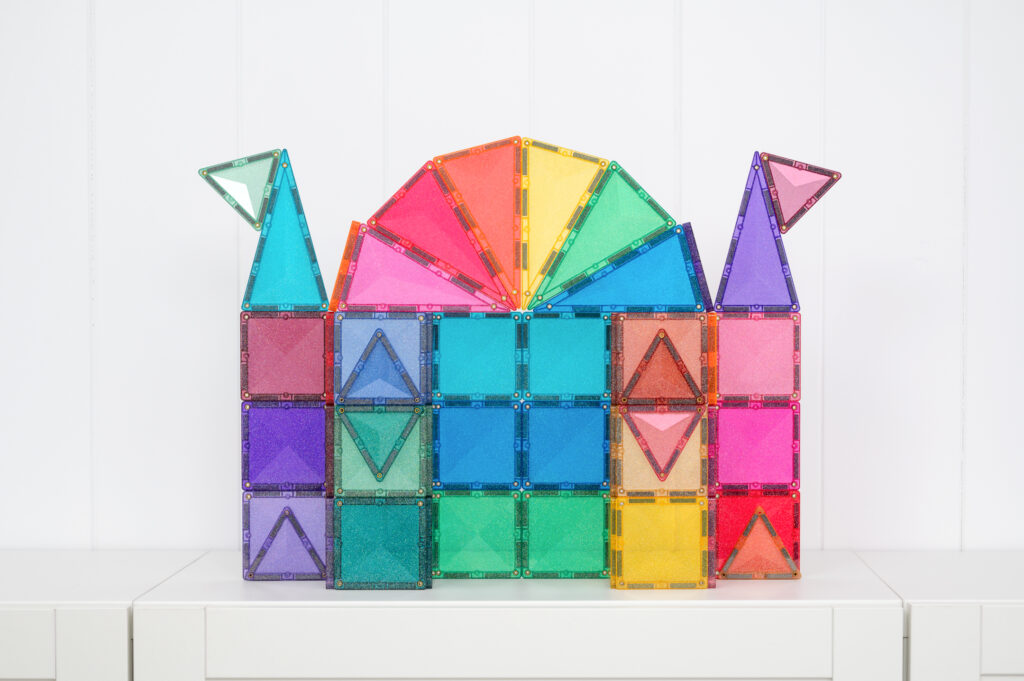
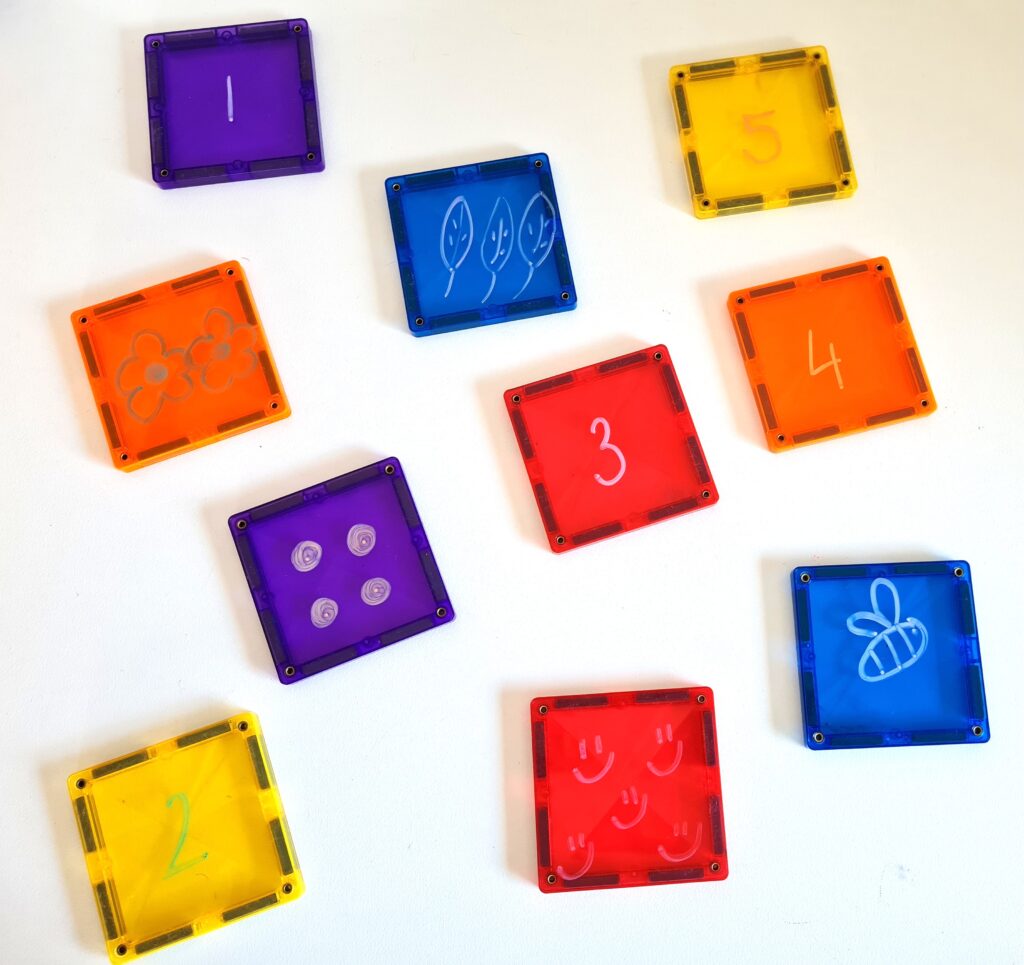
- The bright colours make it easy to colour code the different parts in the process. E.g. the outside tiles can be one colour to show what digits are being multiplied and the inside tiles can be another to show the answers of the two numbers that were multiplied.Â
- It’s captivating and fun! Kids who are active in the learning experience and can make meaning for themselves have increased engagement in their experiences, consolidating their understanding.Â
- The flexibility that comes with using the tiles caters to all types of learning styles as students are able to visualise, listen, move and manipulate objects. They are also given the opportunity to develop their mathematical language and social skills. Â
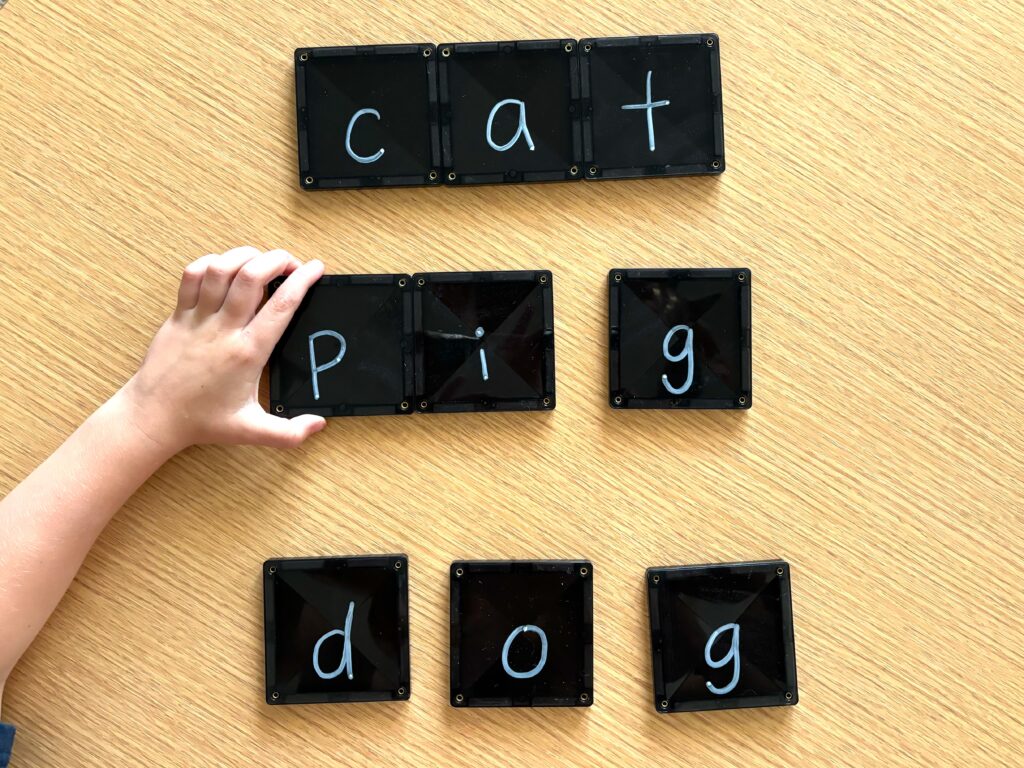
- You can use chalk markers to write on the tiles which makes it even more exciting. It’s also easy to rub off which makes it quick and simple if there’s an error or something needs to be changed. Â
- CONNETIX offers the opportunity to determine where a mistake may have been made (just as bookwork does), providing the opportunity to see the mistake as learning in disguise.Â
- They can be used anywhere, whether the surface is magnetic or not. You can use them on the fridge, washing machine, floor, whiteboard, tables, etc. The options are endless. Â
Using CONNETIX provides children the opportunity to develop these essential skills in a colourful, hands-on means where they’re immersed in their learning. It’s another opportunity to help them develop their knowledge away from traditional bookwork and still acquiring key numeracy skills.