Creative Music Activities for Kids with CONNETIX Tiles
By Sarah Shan
Music provides the soundtrack for our lives by evoking emotions, inspiring movement and dance.
Music is often described as a universal language that has the astonishing ability to bridge cultural and linguistic barriers. Regardless of the language spoken, the harmonies, melodies and rhythms of music have the power to stir up emotions and create connections between people from different cultures and backgrounds.
Music is a group of sounds that have been arranged in a pleasing or meaningful way. Music can be simple, for example one person tapping out a beat on a drum or singing a song. Music can also be complex, for example hundreds of instruments being played together as an orchestra.
CONNETIX are a tool that can help unlock a child’s creative potential. My aim for this blog is to inspire you to consider the opportunities to bring music into your CONNETIX play, as a new branch of creative and imaginative ways to play.
My 5-year-old and I have enjoyed testing out these ideas to share with you. We hope you enjoy them and get to give some of them a go.
Music can enhance vocabulary
Having a rich and diverse vocabulary allows children to say exactly what they mean as well as helping them to understand the world around them. Vocabulary is constantly informed by parents, schools, books, TV shows, and, of course, music.
Listening to or repeating the lyrics of favourite songs, even humming them, is likely to improve a child’s vocabulary.
How can we utilise the language of music with CONNETIX?
Nursery Ryhme Wall
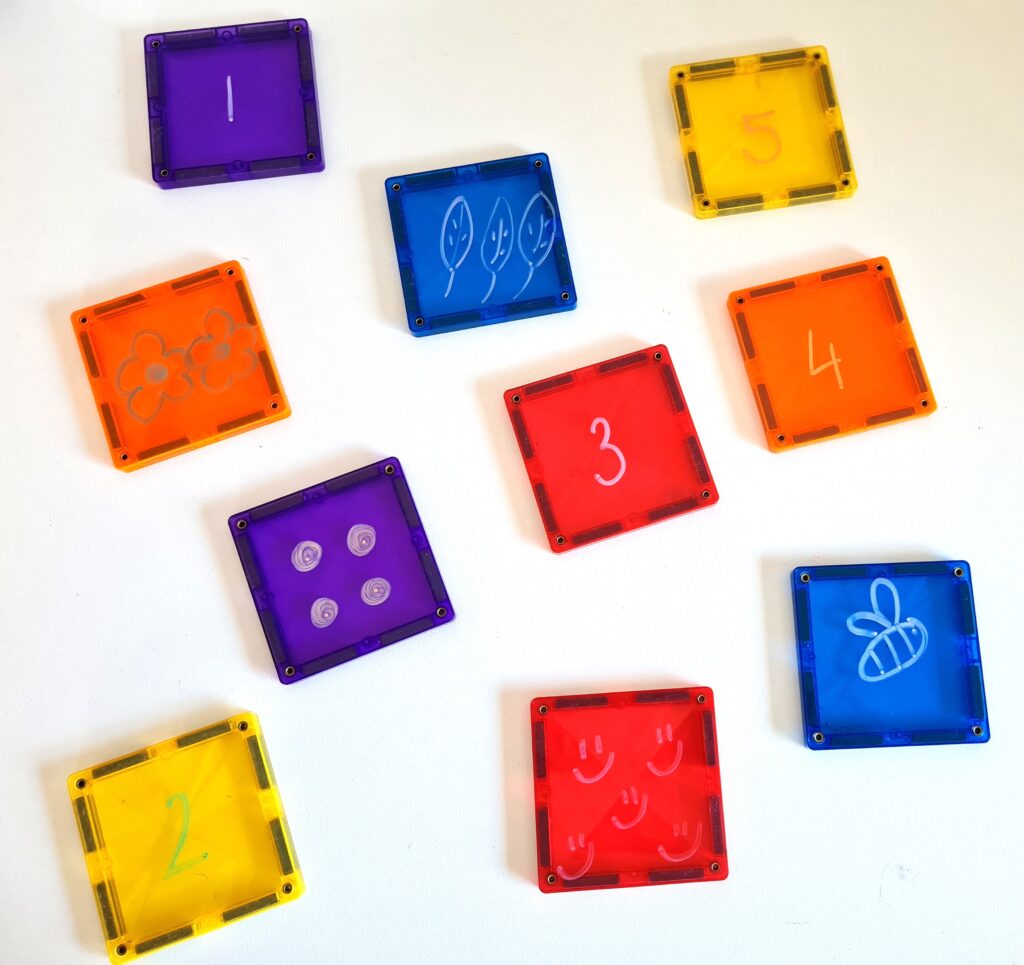
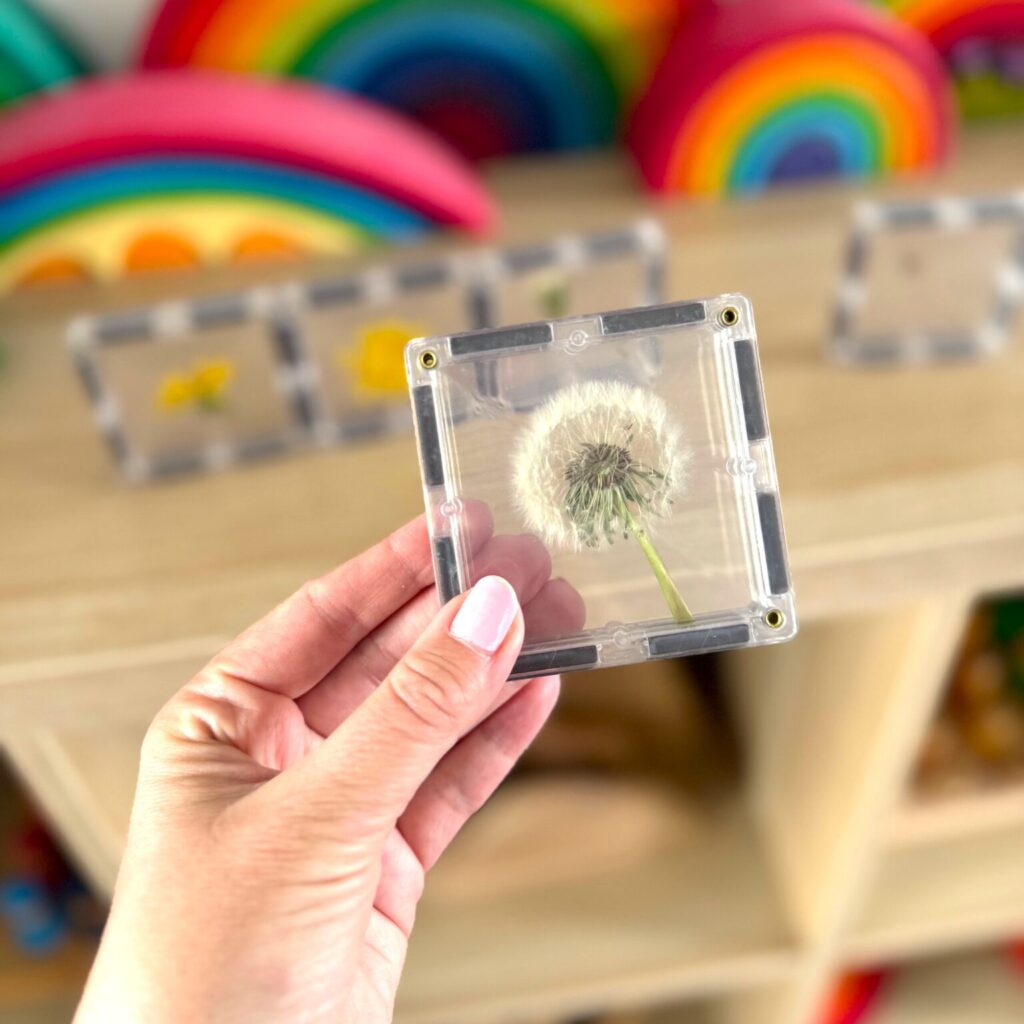
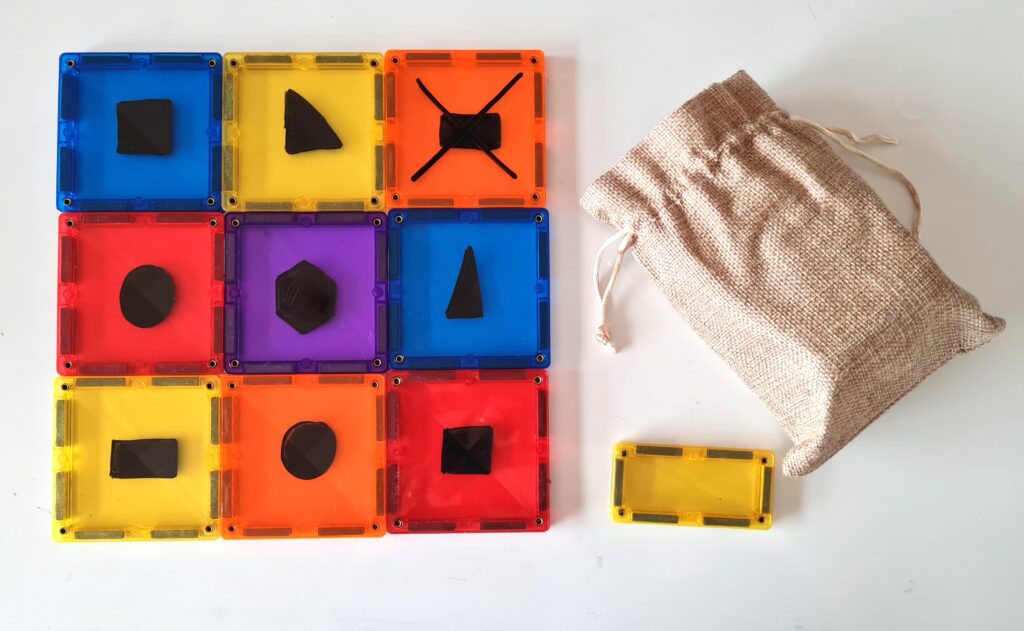
We made a Nursery Rhyme wall, using the tiles as mini frames to hold a drawing of an image that represents a familiar nursery rhyme. We selected a tile to sing or listen to the rhyme, as well as randomly made music alongside it. If you have a child who can play a musical instrument this could be a great way to practice a piece of music.
This could also be a way to learn new vocabulary as songs often have memorable and repetitive lyrics that stick in our minds. This inherent catchiness makes it easier for children to remember and recall words and phrases. The combination of rhyme, rhythm and repetition in songs creates a cognitive connection that helps with vocabulary retention. As learners sing along, they effortlessly internalise new vocabulary and store it in their long-term memory.
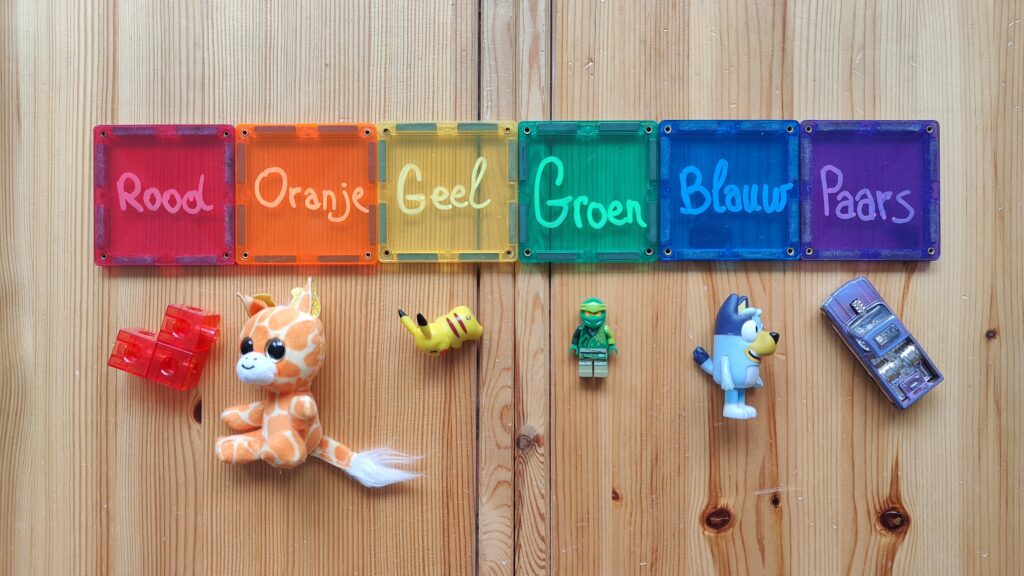
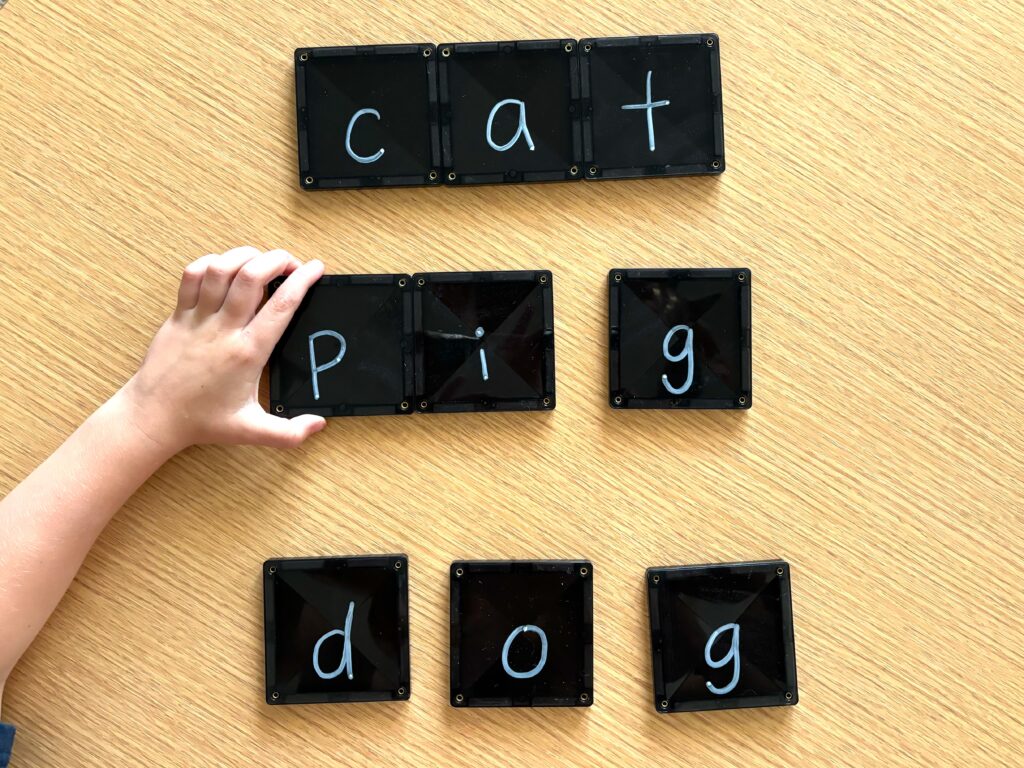
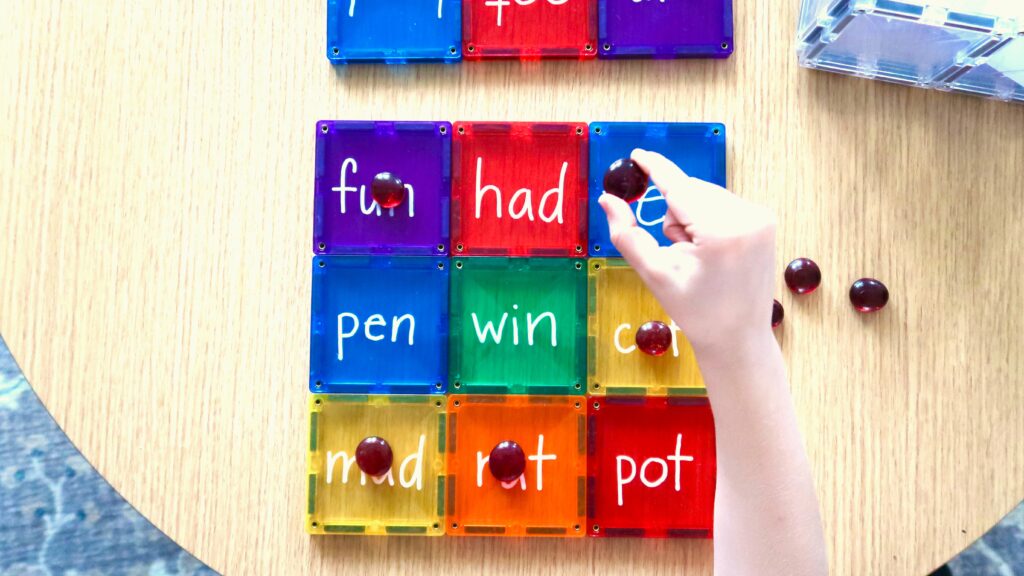
Connetix tiles could also be used to write on keywords or prompts to sequence songs such as the colours of the rainbow or the planets song.
Music supports cognitive function such as memory, attention and imagination
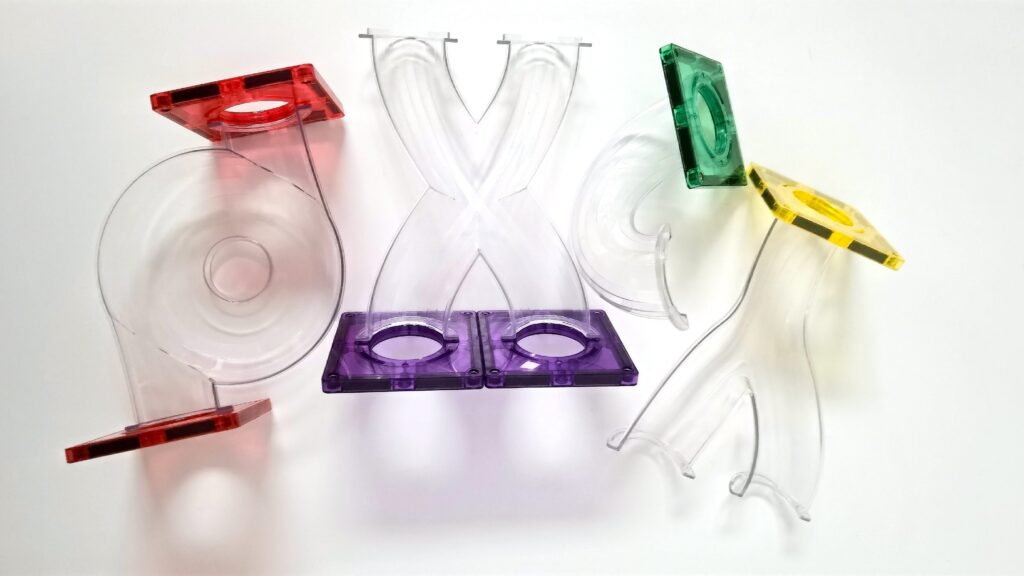
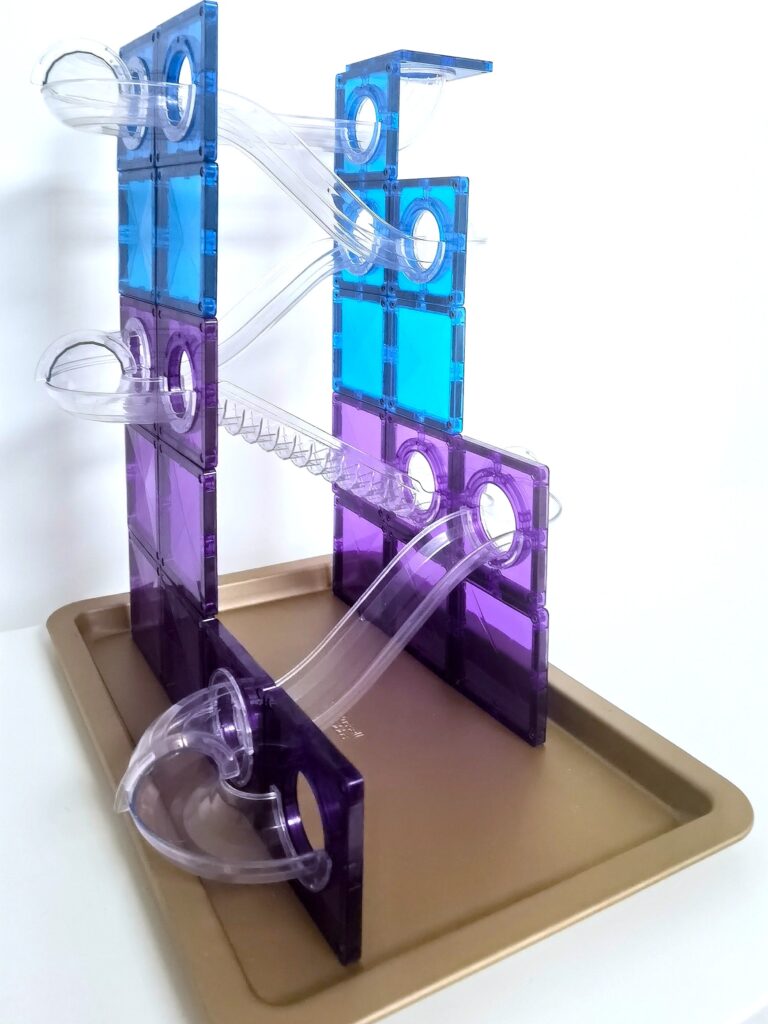
CONNETIX stimulate the use of imagination during play and we wanted to link this with music. We designed ways to use the tiles to make music, one way was by filling the ball run tubes with various items.
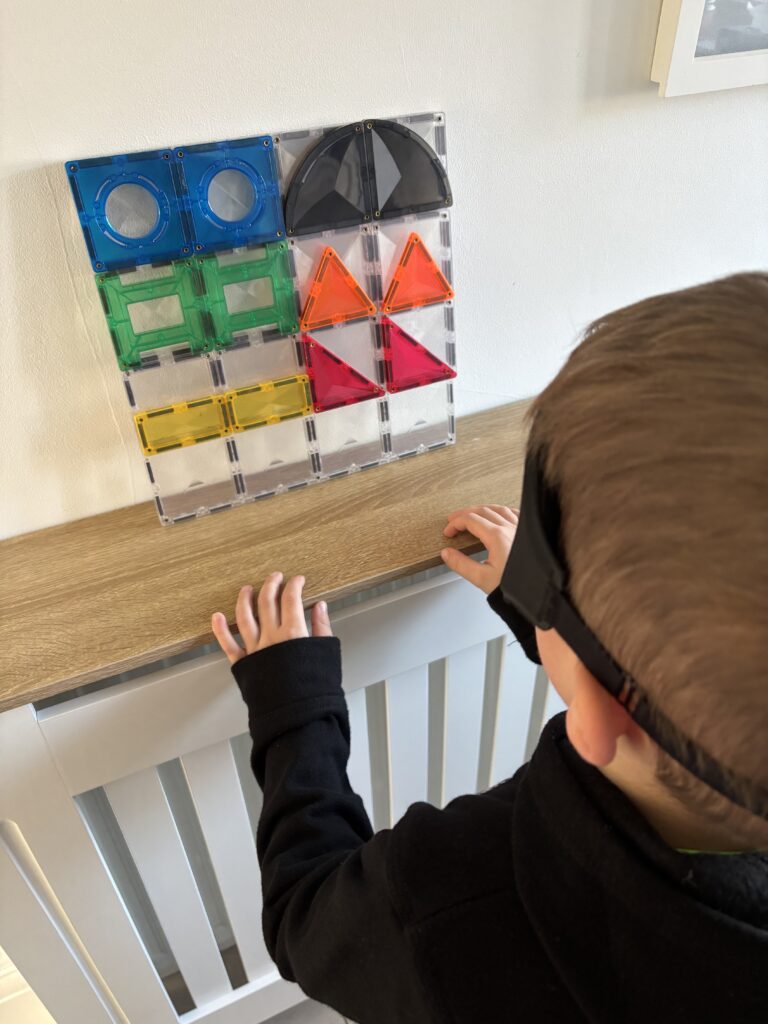
To develop memory, we decided to use the coloured tiles to make a sequence to play on a musical instrument, such as a xylophone. We also have an electric drum which is coloured too. Firstly, my son had to copy the sequence, then memorise it, and play it again.
Music develops reading and writing ability
A sheet of music is read from left to right and there are symbols that provide instructions similar to punctuation. By following musical notes and lyrics, children are inherently learning how to read.
We made a bar of music on our white board and musical notes on the clear magnetic tiles. To help my son understand the five lines are the notes EGBDF (every good boy deserves fruit) and the four spaces in between are FACE. As an activity, we placed them on the bar of music. We will try this again, using a short sequence of notes to represent music.
We also have the letters on the keyboard indicating notes that we played. We recreated a keyboard and used the tiles again to sequence musical notes.
Music encourages self-esteem, healthy expression and self-regulation
By being able to express themselves and make a loud noise or relaxing sounds, children can gain many therapeutic benefits from music.
We made a music wall and left a tray of instruments out for a few days, and I found he constantly returned to them to ‘let loose’. To make the music wall we simply attached musical instruments and CONNETIX parts such as the car base.
Music encourages perseverance
When trying to follow sequences and play notes in a certain order, mistakes are inevitable, and a part of the learning process. As children persevere and get it right, they feel a sense of achievement and success. Children are often eager to share their music with others, which further helps to develop self-esteem.
Music refines perceptual motor skills
Let’s explore a child’s developing ability to interact with the environment by combining the use of their senses and motor skills. Perceptual motor skills are learned through practice, and rely on the ability to interpret and respond to sensory information in real-time. Music can help develop these skills such as hand-eye coordination, gross and fine motor skills.
Practicing using different types of musical instruments can help to develop these integral skills. Action prompts can be used to change the music being played, such as faster, slower, louder, quieter, harder and softer.
Music can develop creativity
Music allows children to develop creativity and explore how different actions, movements and material might make different sounds. They can make up their own melodies and songs. They could also design and create new instruments.
Learning about music, having the opportunity to play musical instruments and make music together is an essential part of development and learning in the formative years. Music can play a key role in brain development as it helps to nurture language, motor skills, emotional intelligence and collaboration skills.
Music is also a way that we express our identities: the music a person plays, or even listens to, can tell the world, their peers, their parents and their friends something about them as a person.
Music has many beneficial effects on children’s development and the possibilities to incorporate music into play is endless. We hope this has helped to express the ways in which music is important, and inspire new ways to use CONNETIX to make music at home for fun or as part of home-school learning.
Sarah Shan
A qualified Science Teacher and mum of 3, Sarah brings her educational knowledge and love of all things STEM to her articles, reviews and play ideas that she shares through her Instagram account.
A qualified Science Teacher and mum of 3, Sarah brings her educational knowledge and love of all things STEM to her articles, reviews and play ideas that she shares through her Instagram account.
https://wpstaq-ap-southeast-2-media.s3.amazonaws.com/connectixtiles-preprod/wp-content/uploads/media/2024/11/CONNETIX-Christmas.mp4Can you believe Christmas is almost here? Some may argue...
https://wpstaq-ap-southeast-2-media.s3.amazonaws.com/connectixtiles-preprod/wp-content/uploads/media/2025/03/Home-educated-kids-1.mp4Photo credit: home.educated.kids What is a Hologram? A hologram is...
How to make factors, multiples, prime and composite numbers fun!...
Sign up to the CONNETIX Club!
As a CONNETIX Club member you will be the first to receive the latest play inspiration, expert advice, exclusive updates on our products and giveaways, as well as special offers JUST for Connetix Club members.
Your amount to pay has been updated
The previous conversion quote has expired. Here is your new quote: