Shipping to: [vcwccr_country_selector]

20% off sitewide* with code CONNETIX20

Introductory offer! 10% off NEW Roads Range.

*20% off code not redeemable on Roads Range. Ends 11.59pm AEST 15th September.

Sale ends in

  • 00Days
  • 00Hours
  • 00Minutes
  • 00Seconds

20% off sitewide with code CONNETIX20*

plus 10% off NEW Road Range. Ends 11.59pm AEST 15th September.

*20% off code not redeemable on Roads Range.

  • 00Days
  • 00Hours
  • 00Minutes
  • 00Seconds

Building Emotional Fortresses: How CONNETIX Can Teach Kids Self-Regulation

Building Emotional Fortresses: How CONNETIX Can Teach Kids Self-Regulation

By Emily Hanlon

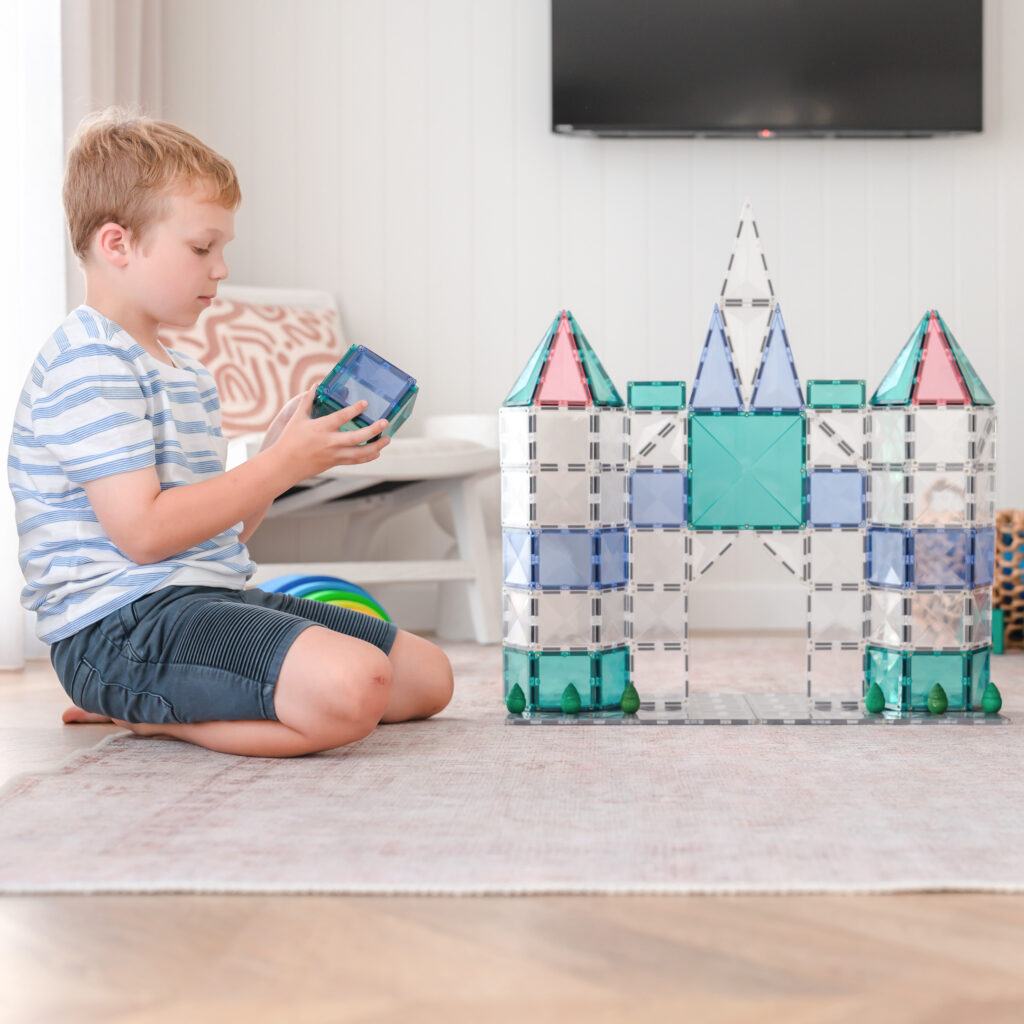
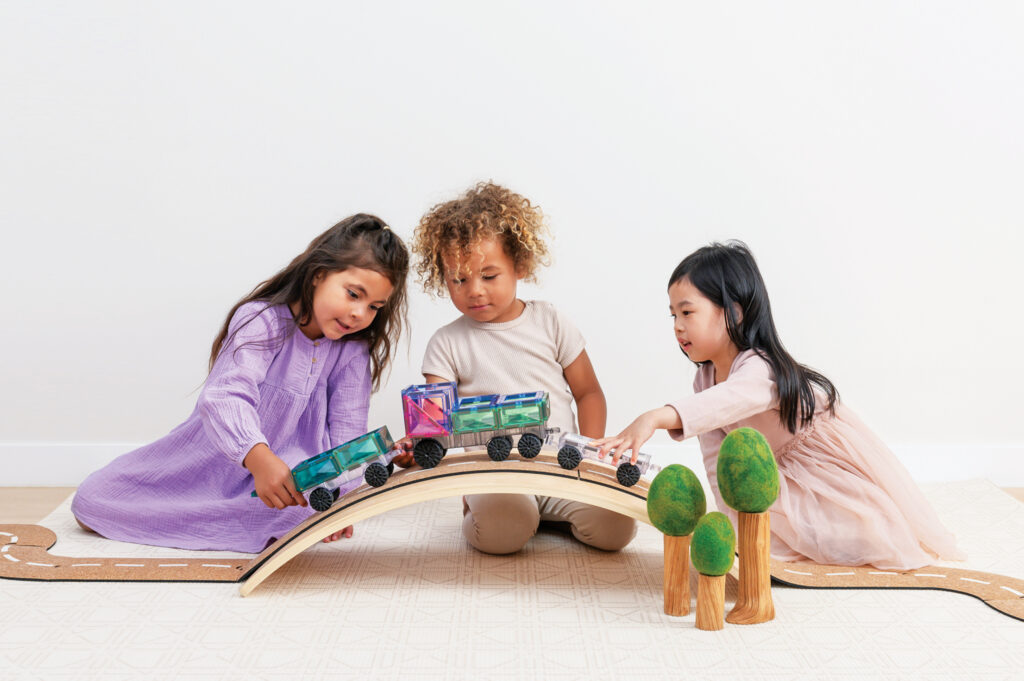
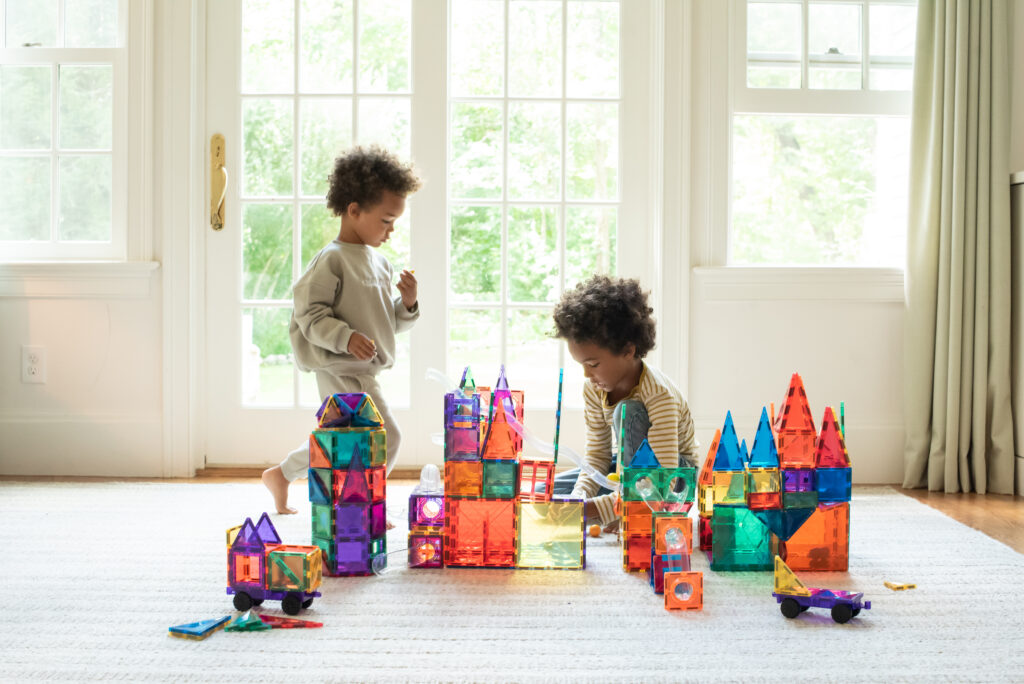
If you’ve been following along with previous blogs, you already know that CONNETIX magnetic tiles are more than just a colourful way to cover your living room floor; they are one of the most versatile, open-ended toy options on the market. These tiles are also an incredible tool for fostering Mental, Emotional and Social Health (MESH) in young children. From perseverance to problem-solving, these little tiles pack a developmental punch.

In the last blog, we explored how CONNETIX can help children develop conflict resolution skills (because let’s be honest, there’s no shortage of sibling spats over who gets the last red tile). Today, we’re diving into another crucial life skill: self-regulation.

If conflict resolution is about navigating the storm, self-regulation is about developing the skills to calm the storm before it escalates. It’s the difference between a child melting down over a toppled tower and a child taking a deep breath, problem-solving, and trying again.

And while self-regulation takes time to develop, play-based strategies, like using CONNETIX, can make this learning process both engaging and effective.

What Is Self-Regulation and Why Does It Matter?

Before we dive into some play ideas, let’s clear the air on self-regulation.

Self-regulation is a child’s ability to manage their thoughts, emotions and behaviours in a way that helps them engage with the world effectively. It’s what helps kids take a deep breath instead of throwing the entire basket of tiles when their tower collapses.

Strong self-regulation skills support:

  • Mental health: Developing cognitive flexibility and impulse control.
  • Emotional health: Recognising, understanding and managing big feelings.
  • Social health: Navigating play and relationships with greater ease.

And here’s the kicker, self-regulation isn’t just about calming down when things go wrong. It’s also about sustaining attention, adapting to challenges and persisting through frustration. CONNETIX tiles, with their endless building possibilities (and inevitable structural failures), provide the perfect setting for practicing these skills.

How to Use CONNETIX to Foster Self-Regulation

1. Build Frustration Tolerance Through Play

Frustration tolerance is a key component of self-regulation. Children who can manage frustration are more likely to persevere through challenges and problem-solve instead of melting down.

Play idea:

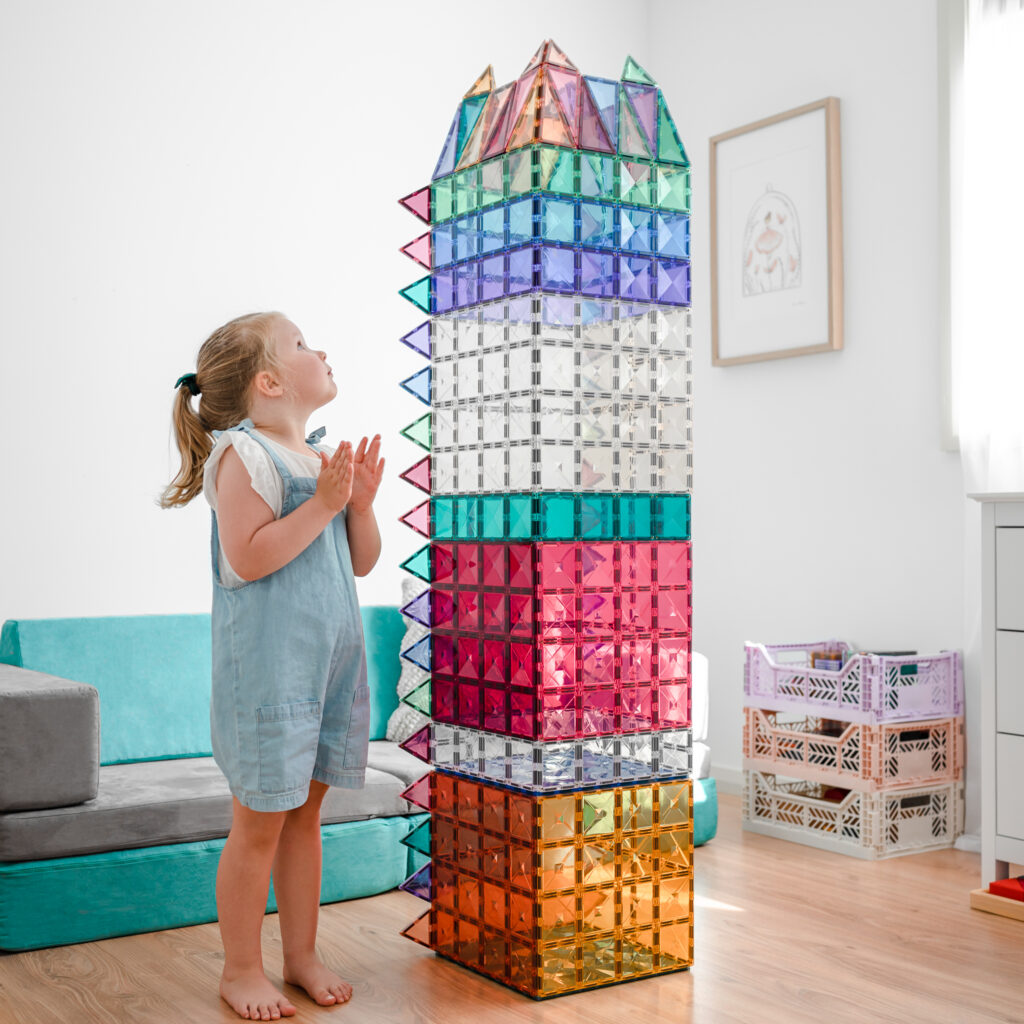
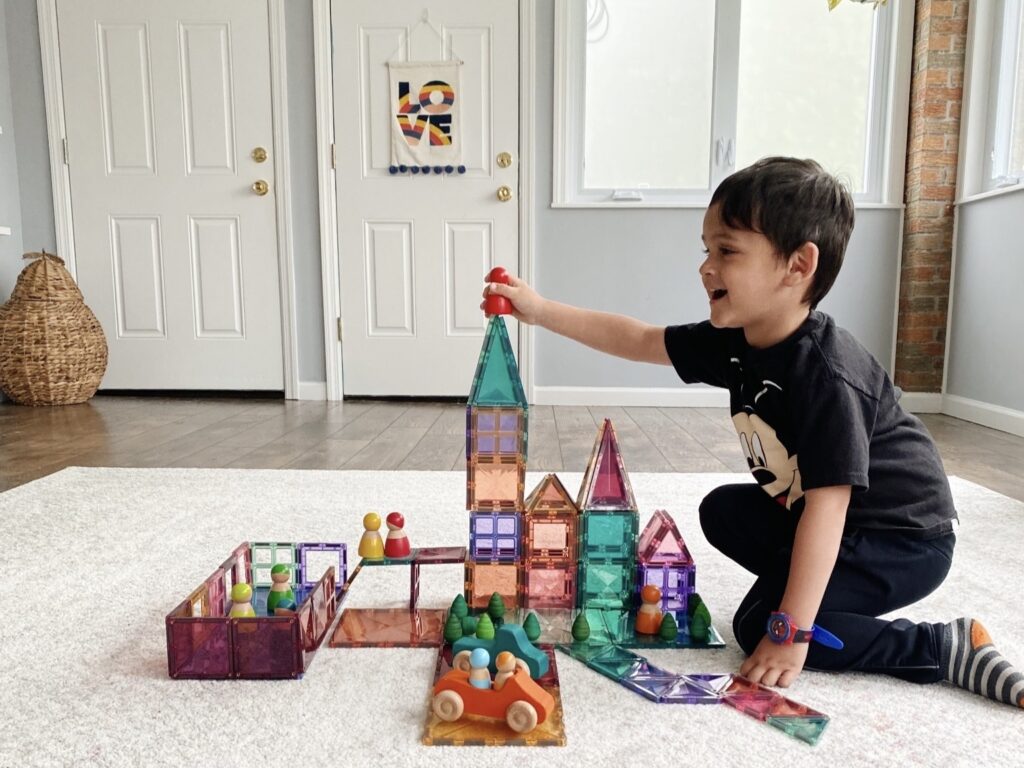
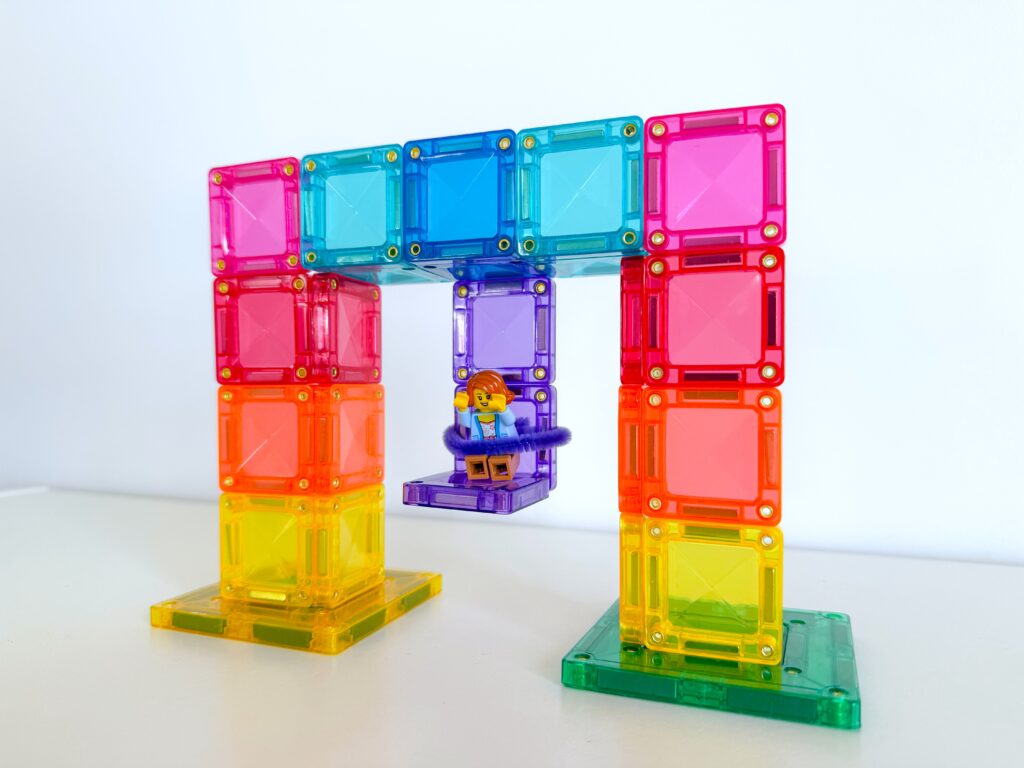
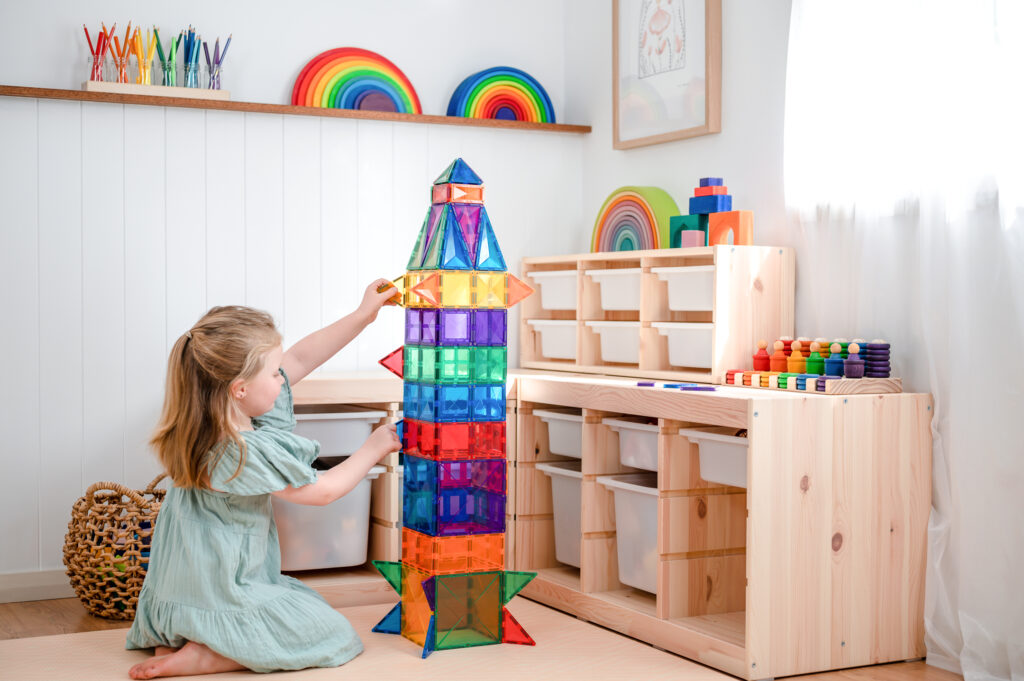
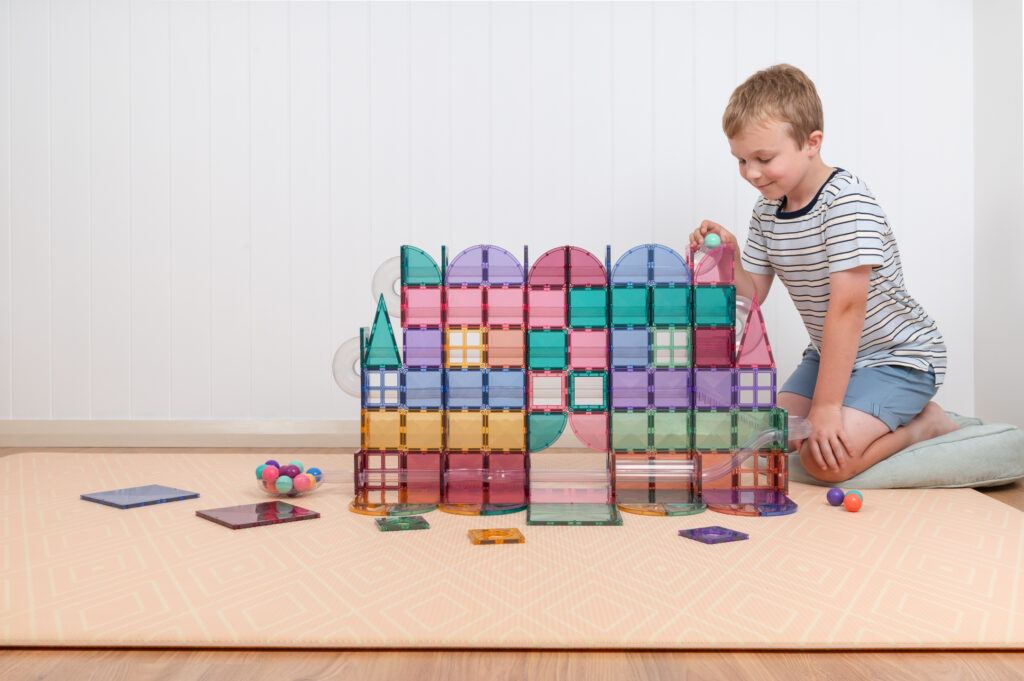
"The Tallest Tower Challenge"

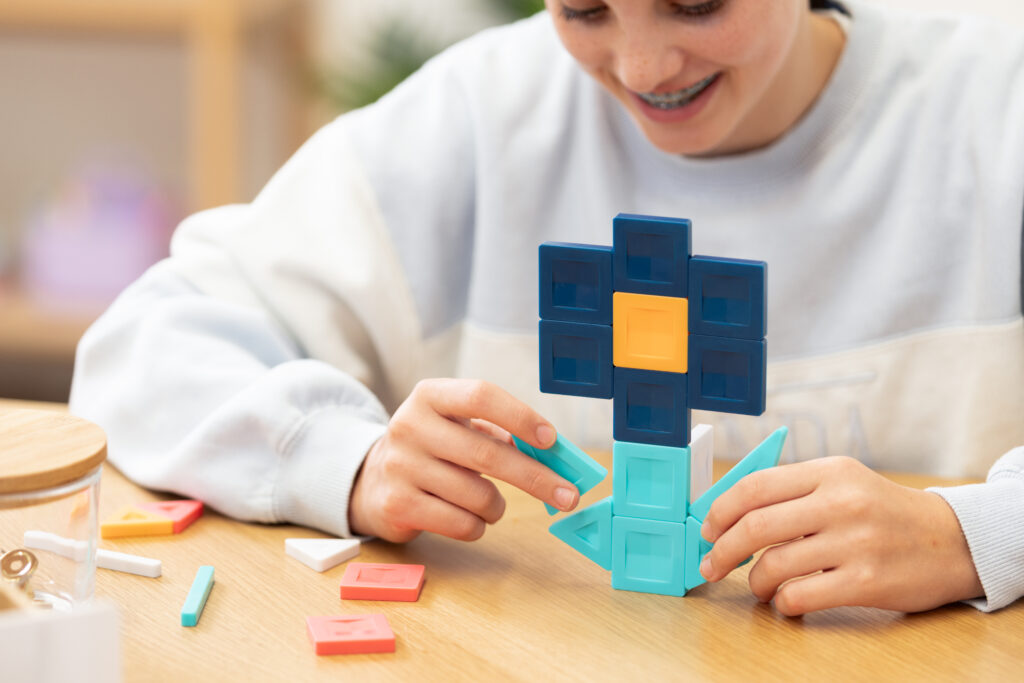
  • Set a goal: “Let’s see how tall we can build a tower before it wobbles!”
  • Encourage persistence: “Hmm, that didn’t work. What else could we try?”
  • Validate frustration: “Ahh, I saw how hard you worked on that. It’s really tough when things don’t go the way we want.”
  • Model coping strategies: “I’m going to take a deep breath and try again. Want to help?”

By framing frustration as part of the process, children learn that setbacks are not reasons to give up, but opportunities to try something different.

2. Support Emotional Regulation with a “Pause and Plan” Strategy

When emotions run high (because someone stole the piece they needed), children need guidance to manage their reactions.

Play idea:

“Pause and Plan” Corner

  • Designate a cosy space where kids can step back, take deep breaths and think before reacting.
  • Teach self-talk: “I’m feeling really frustrated. I need a moment.”
  • Offer regulation strategies: “Would you like to squeeze a pillow, take some deep breaths or get a drink of water?”
  • Encourage problem-solving: “What could we do to make this feel fair?”


Over time, this builds a habit of pausing before reacting, a crucial skill for emotional regulation.

3. Develop Impulse Control with Turn-Taking Games

Self-regulation isn’t just about managing emotions; it’s also about controlling impulses (which, in a child’s world, is akin to mastering Jedi-level patience).

Play idea:

“Pass the Piece”

  • Play a collaborative game where each person adds one tile per turn to a shared structure.
  • Encourage waiting: “It’s my turn now, and then it’s yours.”
  • Celebrate patience: “You waited so well! Now you get to add your piece.”
  • Help manage urges: “I know it’s hard to wait. Let’s count to five together while we wait.”

This practice helps children strengthen their ability to control immediate desires and work towards a shared goal.

4. Encourage Flexible Thinking with Open-Ended Challenges

Rigid thinking can lead to meltdowns when things don’t go as expected. Encouraging flexibility helps kids adapt when the “perfect” plan doesn’t work out.

Play idea:

“Surprise Creations”

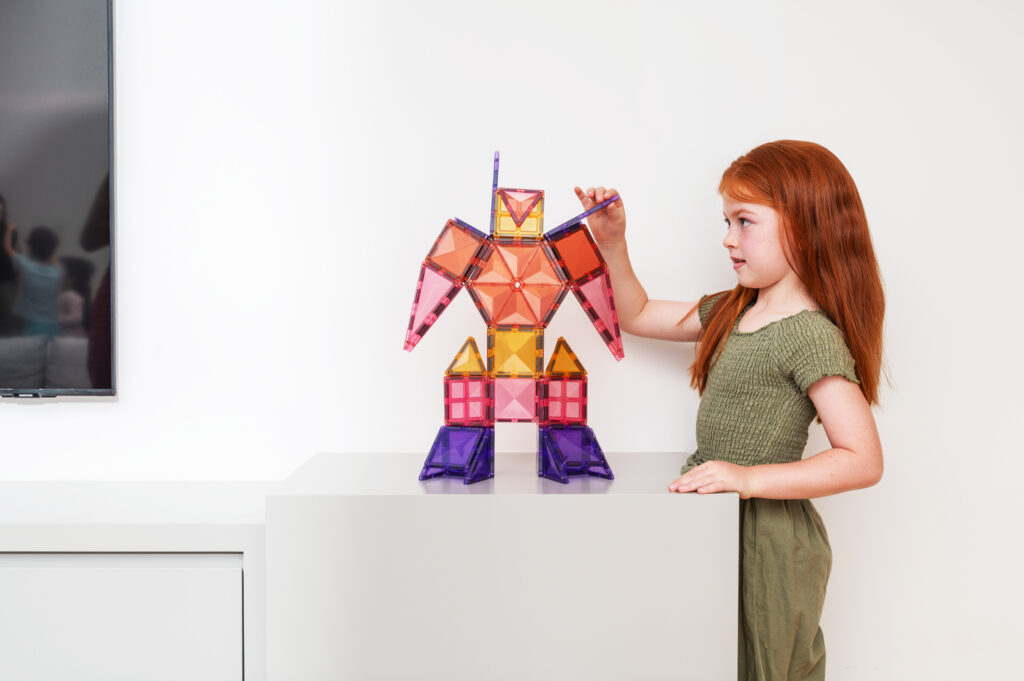
  • Give your child a handful of random CONNETIX tiles and challenge them to make something creative.
  • If they get stuck, ask open-ended questions: “What could this be? What else could you turn it into?”
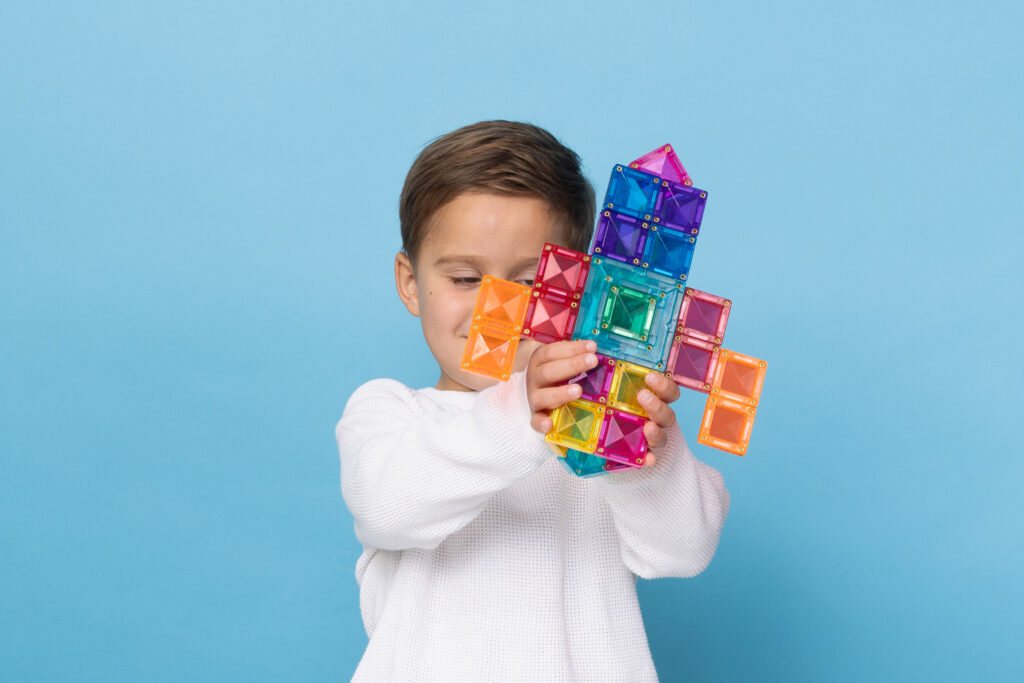
  • Normalise unexpected outcomes: “I thought I was making a rocket, but it looks more like a dinosaur. I like it!”


Flexible thinking builds resilience and reduces frustration when things don’t go as planned.

5. Teach Deep Breathing and Movement Breaks During Play

Physical regulation (the ability to calm the body) is just as important as emotional regulation. Integrating calming techniques into play can help children learn to self-soothe.

Play idea:

“Breathe and Build”

  • Introduce a simple breathing exercise: “Let’s take a big deep breath every time we add a new piece.”
  • Use movement breaks: “Let’s shake out our hands before we start building again.”
  • Incorporate mindfulness: “Let’s close our eyes and picture what we want to build before we start.”


Making these strategies part of playtime helps children practice them in a low-pressure setting, so they’re more likely to use them when needed.

Let’s Recap…

Self-regulation is one of the most valuable skills a child can develop. It sets the foundation for resilience, problem-solving and positive social interactions. The best part? You don’t need a complicated system to teach it, just a pack of CONNETIX tiles, a bit of patience and a willingness to model regulation yourself (even when your own tower falls over, again).

So, next time your child’s tower crashes down, resist the urge to rebuild it for them. Instead, take a deep breath together, offer a supportive word, and watch as they learn to try again. Because every wobble, every rebuild, and every “let’s try something different” moment is a step towards mastering self-regulation—one magnetic masterpiece at a time.

You might also enjoy

Stay Updated

If you’d like to be informed when we release one of our new articles about open-ended play and STEAM concepts, please subscribe below.

Join the CONNETIX Club

Access free downloads, exclusive offers, sneak peeks & more!

You might also enjoy

Sign up to the CONNETIX Club!

As a CONNETIX Club member you will be the first to receive the latest play inspiration, expert advice, exclusive updates on our products and giveaways, as well as special offers JUST for Connetix Club members.