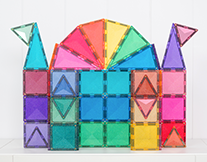
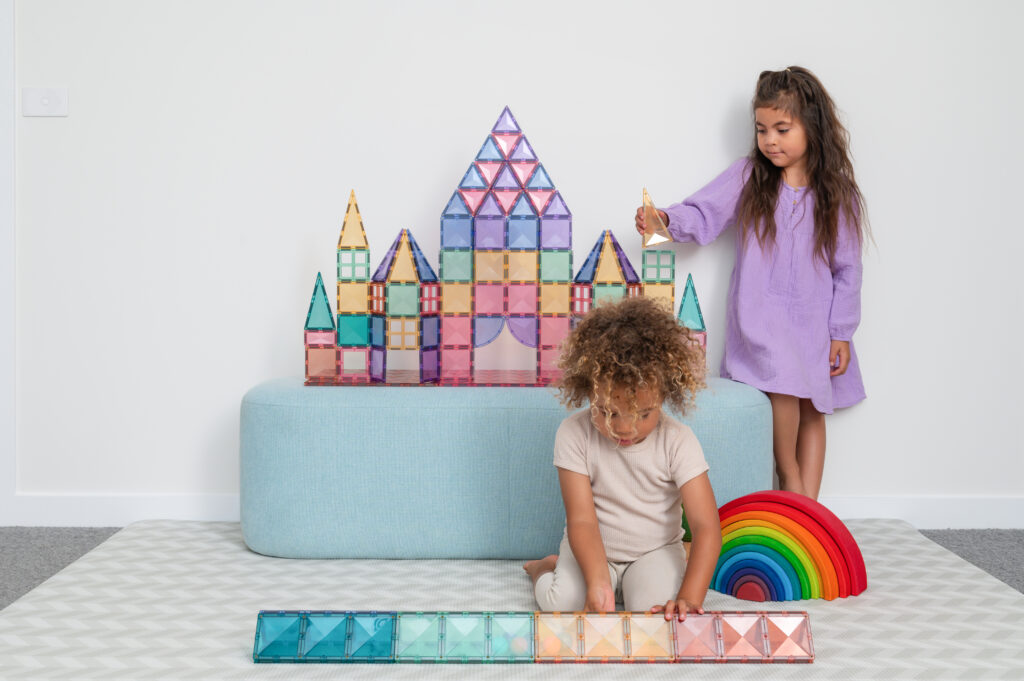
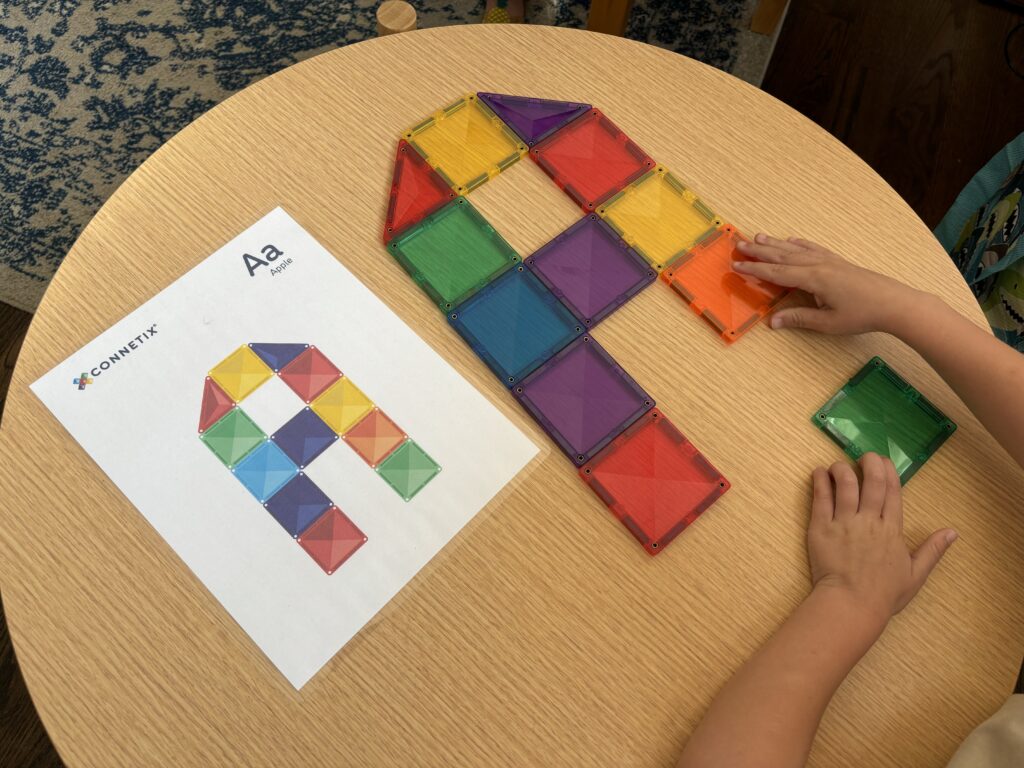
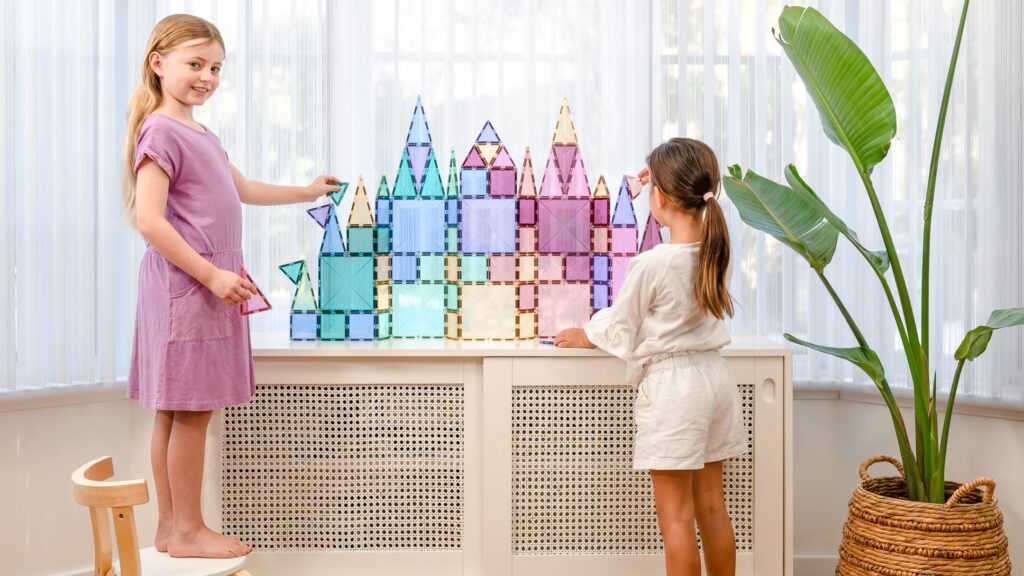
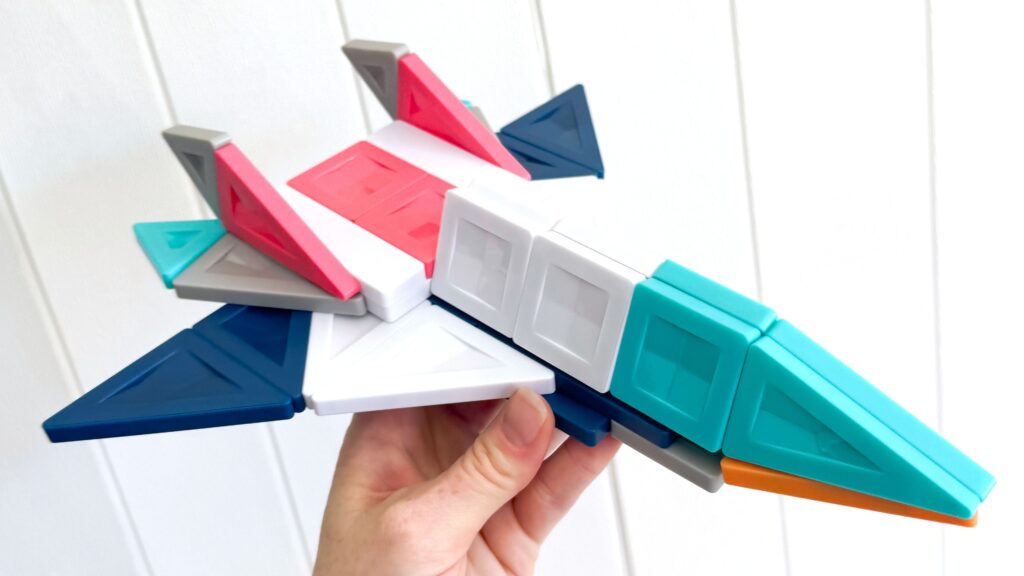
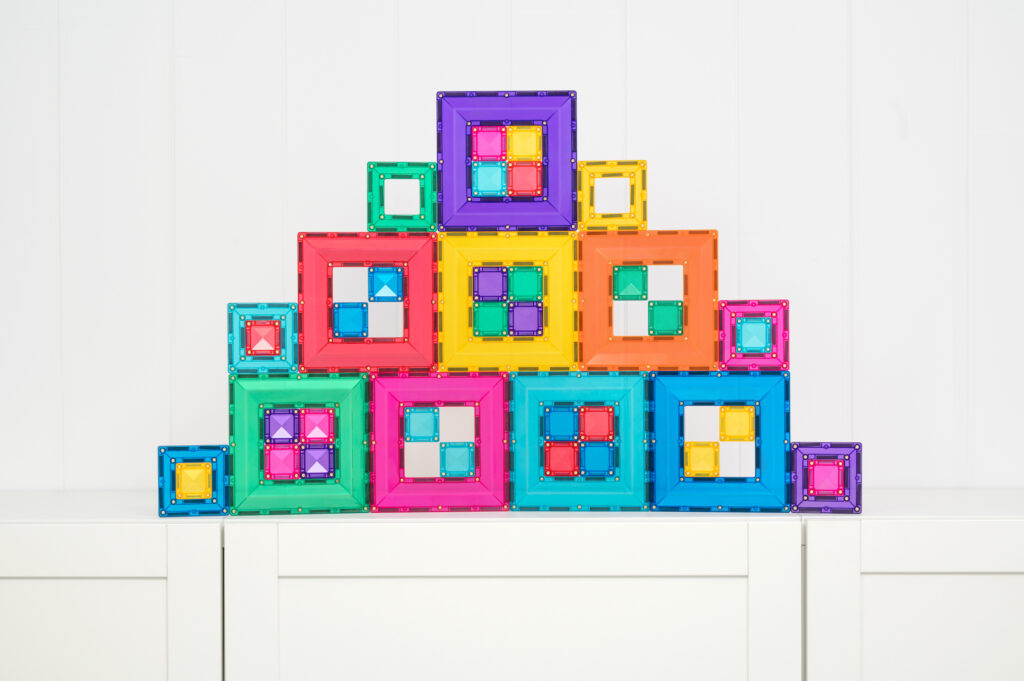
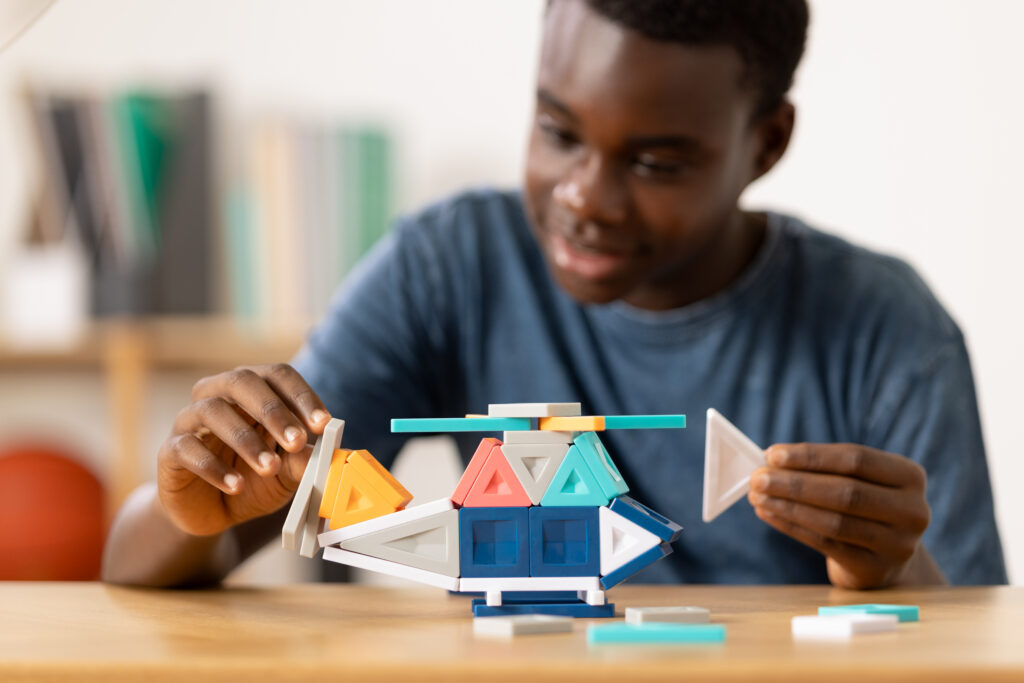
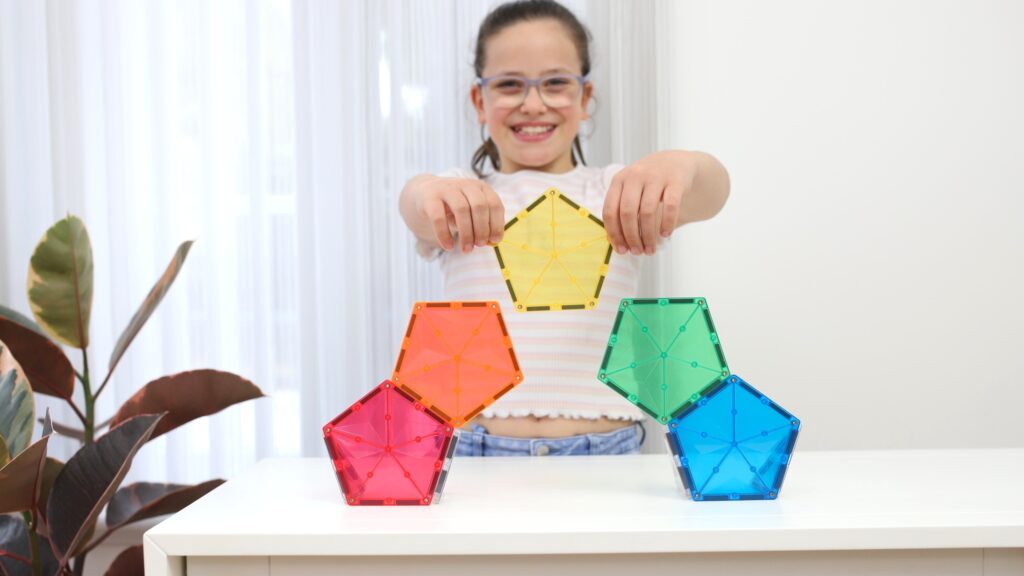
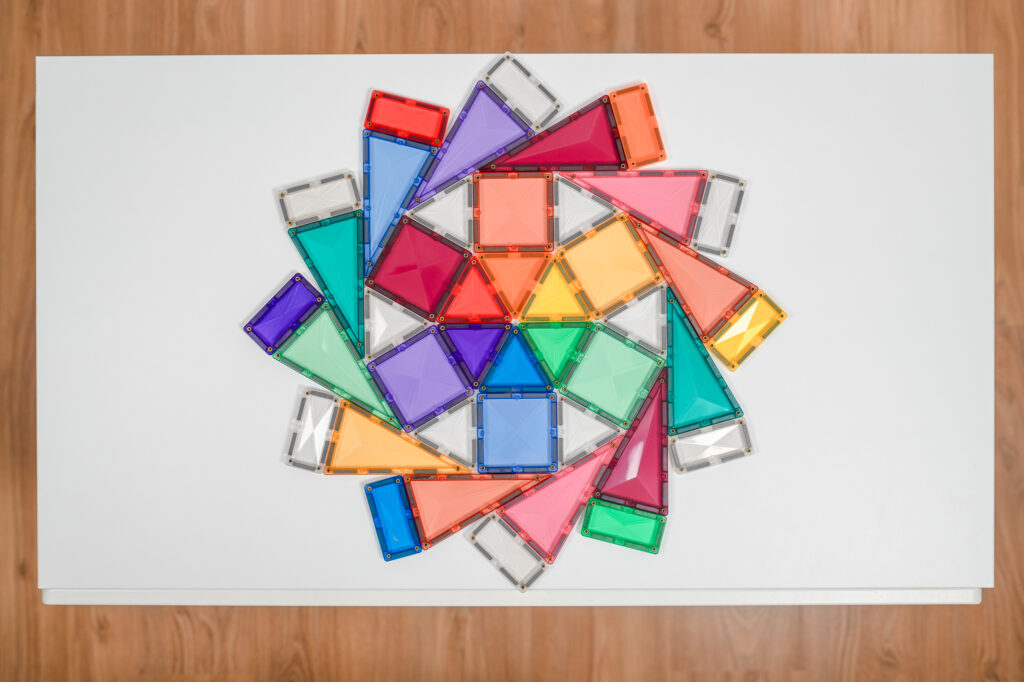
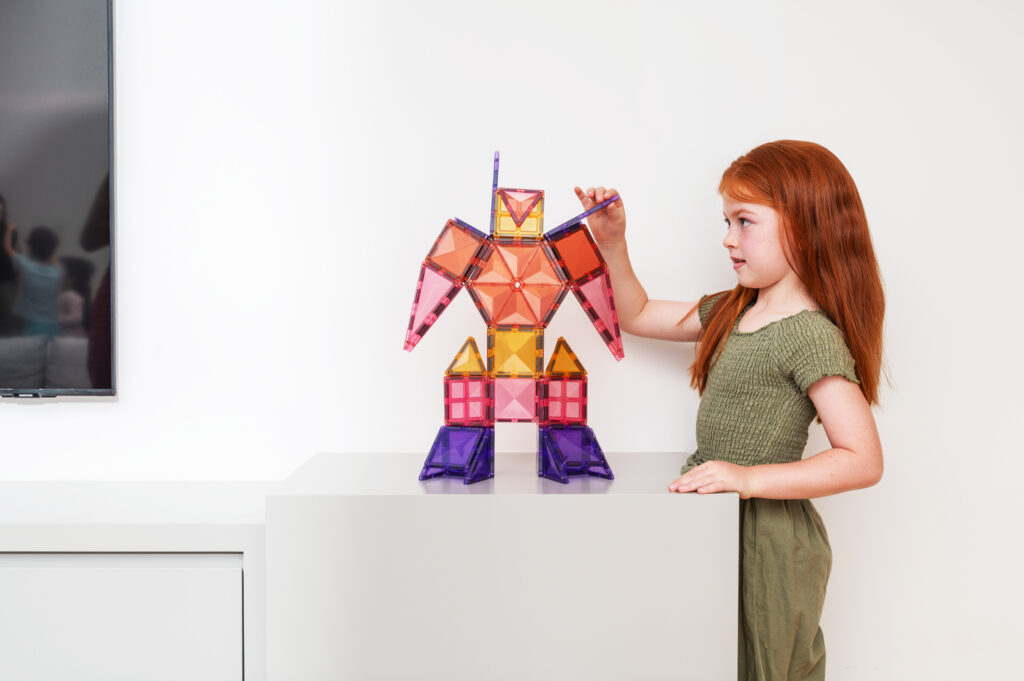
CONNETIX is not only a playroom favourite for our children but a fantastic resource for exploring a wide range of maths concepts. This time we focused on multiplication, logic puzzles, fractions and coordinates, as well as integrating movement into learning maths. While these 5 simple activities were created for my 7-8 year olds, they can be easily modified to suit younger or older children.
1. Roll the dice to fill 100 squares with arrays
A 100s chart is a versatile tool for children of all ages. In the early years, it is often used for teaching number recognition, place value, adding and subtracting, multiplication patterns and games like Snakes and Ladders.
As a child’s mathematical skills and number sense develop, a blank 100 grid chart can also be used for learning various concepts such as area, perimeter, coordinates, graphs and shape reflections. It also creates a visual and hands on way for children for explore multiplication through arrays (rows and columns). To do this, I created a large CONNETIX-sized 100s grid to use in combination with our square tiles. Children can make arrays with CONNETIX and turn it into a game by filling in the chart as much as possible.
Activity:
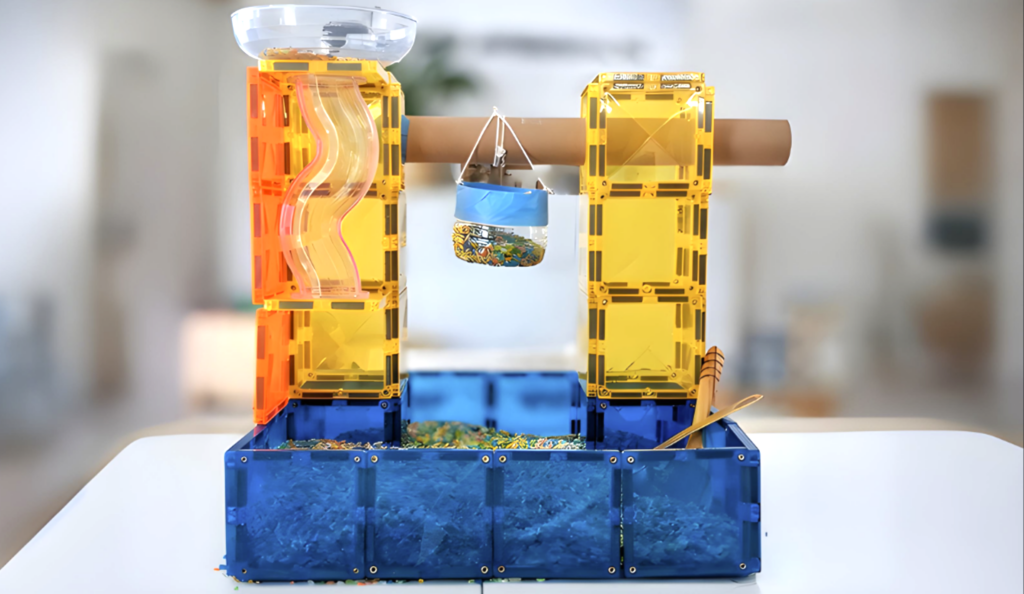
Draw a 10×10 grid on a large sheet of paper or cardboard to fit 100 square tiles. Roll 2 dice to make an array (e.g. rolling a 3 and 4 means making 3×4=12). To keep the dice from rolling far away, make a CONNETIX tub to throw the dice inside. The aim is to fill 100 squares with arrays.
2. Sudoku 6x6 puzzles
Brain teasers and logic puzzles like Sudokus challenge children to apply logical thinking skills to solve problems. While it does not involve doing arithmetic, it relies upon pattern recognition and the ability to make deductive inferences. Similar to solving a complex mathematical problem, children engage in mathematical thinking and reasoning to seek out patterns and then draw conclusions.
Sudoku puzzles encourage children to learn from trial and error. They have to pay attention to every detail, and it may take several attempts before they get to a solution. This develops their skills for problem-solving and creative thinking.
Activity:
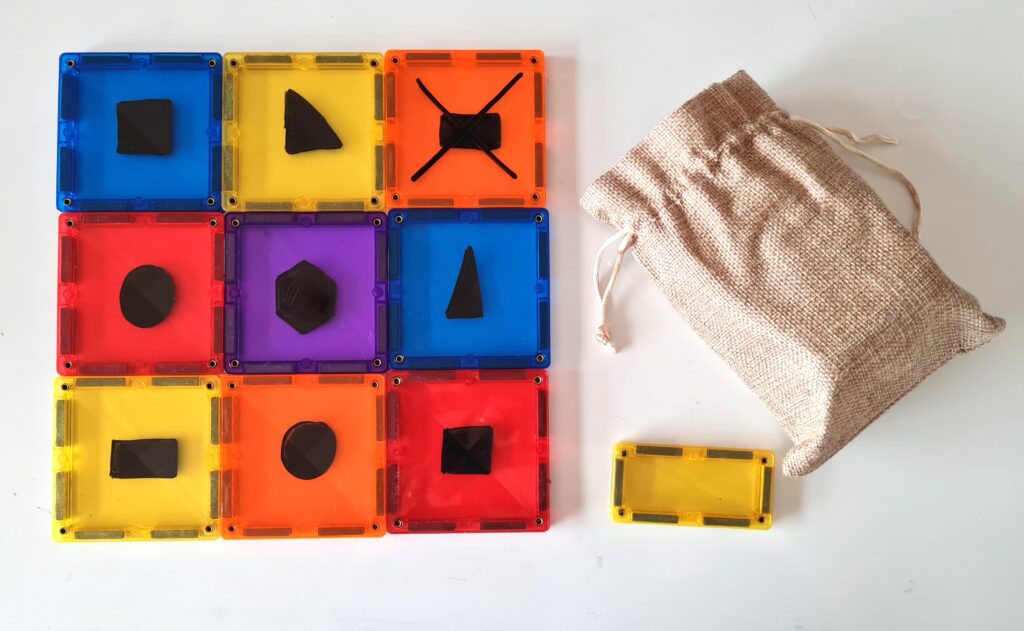
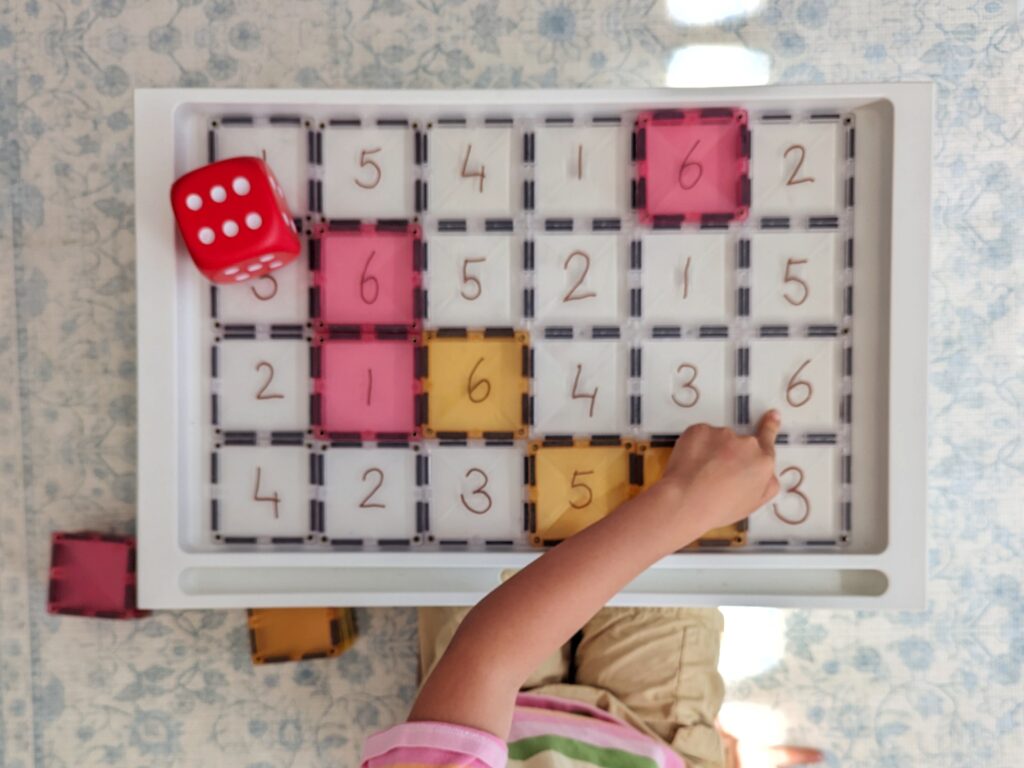
Create a 6×6 sudoku grid using CONNETIX square tiles. Use a different colour for each 2×3 box. Each row, column and coloured box contains the digits 1 to 6. The goal is to fill in the numbers of all the empty squares (without repeats) by using the given clues in various boxes.
To modify the activity for younger children, make a 4×4 puzzle and to extend it for older children, make a 9×9 puzzle.
3. Fractions post it match
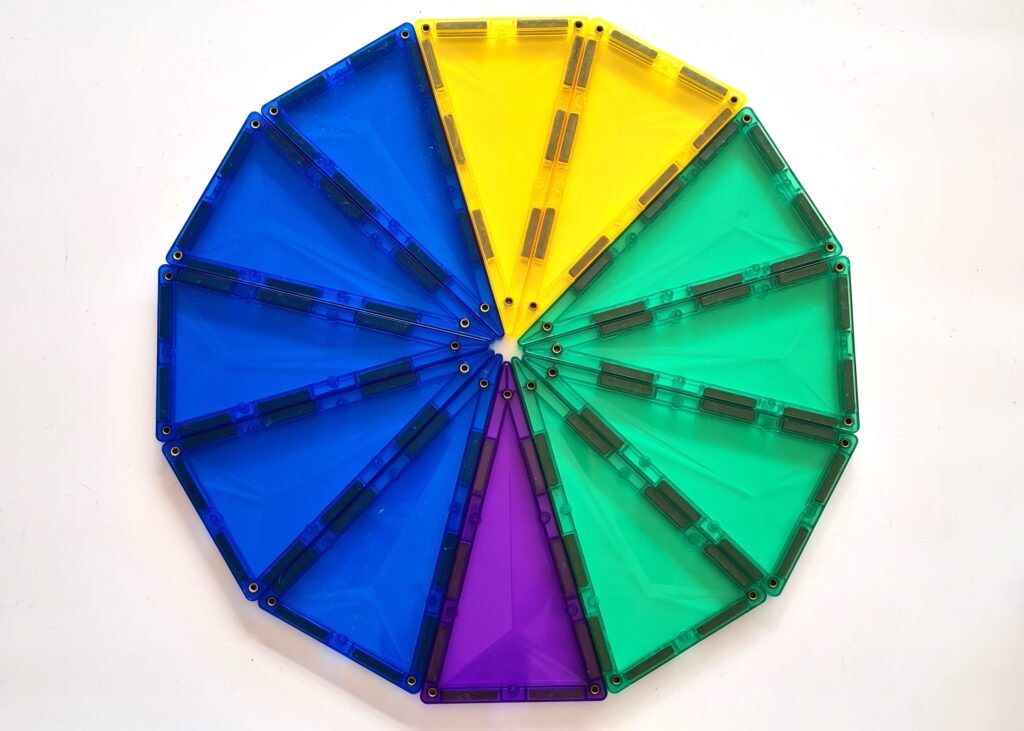
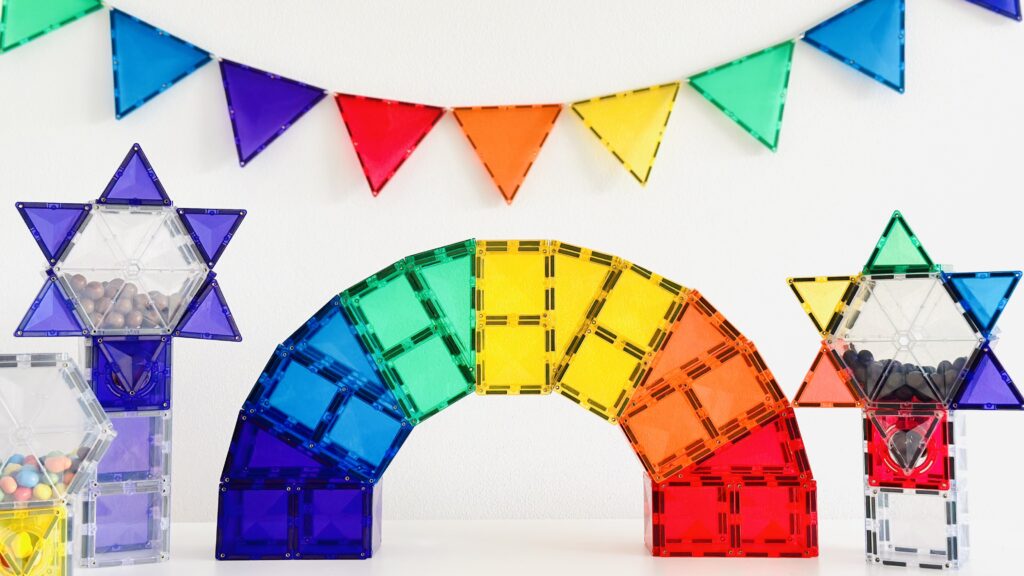
The various geometric shapes and colours of CONNETIX makes a fun and interactive way to create different fractions. There are many ways to combine the tiles to represent fractions and teach children the part-whole relationship. A “quarter” for example can be a rectangle, a square, a quarter circle, a triangle and so on. The consistent sizes of the tiles allow them to fit together for demonstrating fraction concepts. The different colours of CONNETIX also allow children to investigate what fraction is each colour of the whole.
Children can explore the relationships that exist among the shapes. For example:
- 2 rectangles make 1 square, so each rectangle is half of the square.
- 6 equilateral triangles make 1 hexagon, so each triangle is one sixth of the hexagon.
- 4 quarter circles make 1 circle.
Activity:
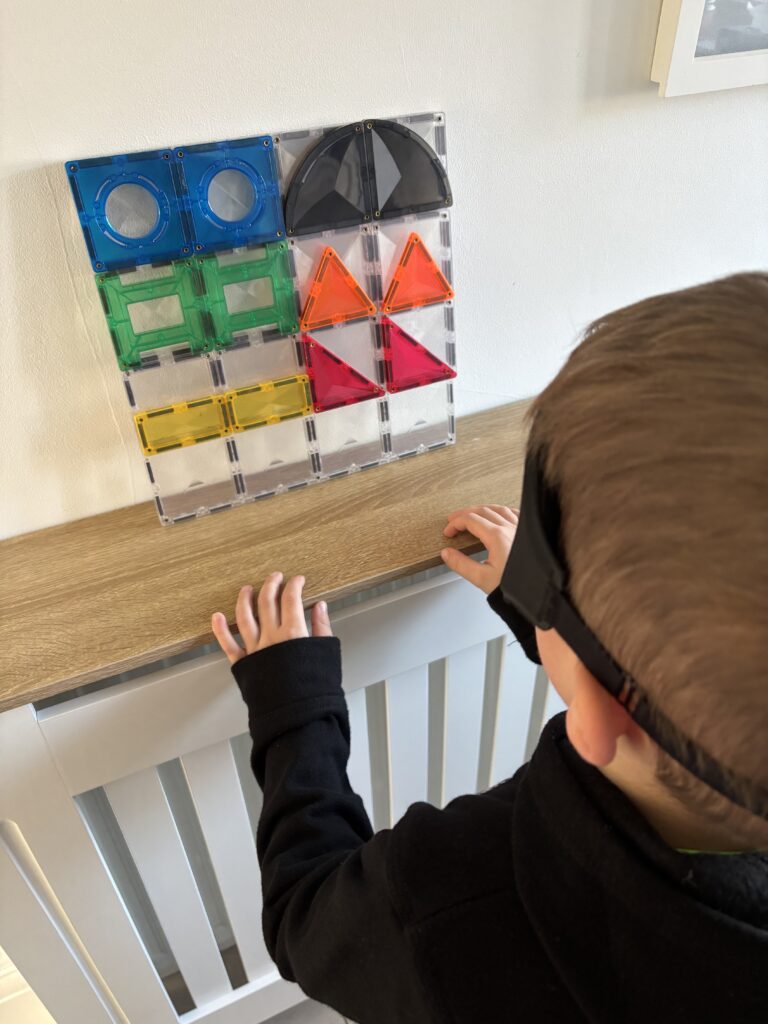
Using the Pastel Creative Pack and Clear Starter Pack, I created various fractions and shapes. I wrote the fractions down on post-it notes with the clear tiles as the numerator (top number) and pastel tiles as the denominator (bottom number). The object is to match the post-it note with the corresponding fraction.
4. Plot the CONNETIX shapes
Understanding coordinates is a fundamental real-world skill for children as they learn to graph points on a coordinate plane. Coordinates are usually two numbers or sometimes a letter and a number, that locate a specific point on a grid. We write coordinates as (x, y) meaning the point on the x-axis is written first. To help children remember, teach the phrase “along the corridor, up the stairs” meaning follow the x-axis first and then the y.
Children learn about locations, positions and map reading when they have to plot or locate a point on a grid plane. From going on a bush walk to navigating around a theme park, coordinates will show you where you are and what direction to take. Learning to read and write coordinates is an essential maths skills used in real life. As children’s skills and understanding develop, they can begin to look at the other quadrants of a coordinate plane that involve negative numbers.
Activity:
Using the same 10×10 grid from activity #1, place dot stickers numbered 0-10 along the x-and y-axis. Draw some CONNETIX shapes with coordinates. The aim is to plot the CONNETIX shapes onto the correct coordinate points.
5. Target throw and add
Integrating movement into maths by offering children a chance to get physically active when learning new concepts can help improve their focus, engagement and memory retention. This multi-sensory approach to learning can be done with rhythmic activities, music and games that get children moving with their whole bodies. For example, for young children learning to count backwards, simply reciting the words without an understanding of the numerical value can make the learning experience meaningless. However, getting children to stand and count down while jumping backwards will bring the concept to life as they physically move back while counting.
Even for older children the physical movement coupled with learning mathematical concepts stimulates the whole brain, thus helping with information retention. Turning an activity such as adding into a movement activity makes it more engaging, particularly when throwing beanbags at a CONNETIX build is involved!
Activity:
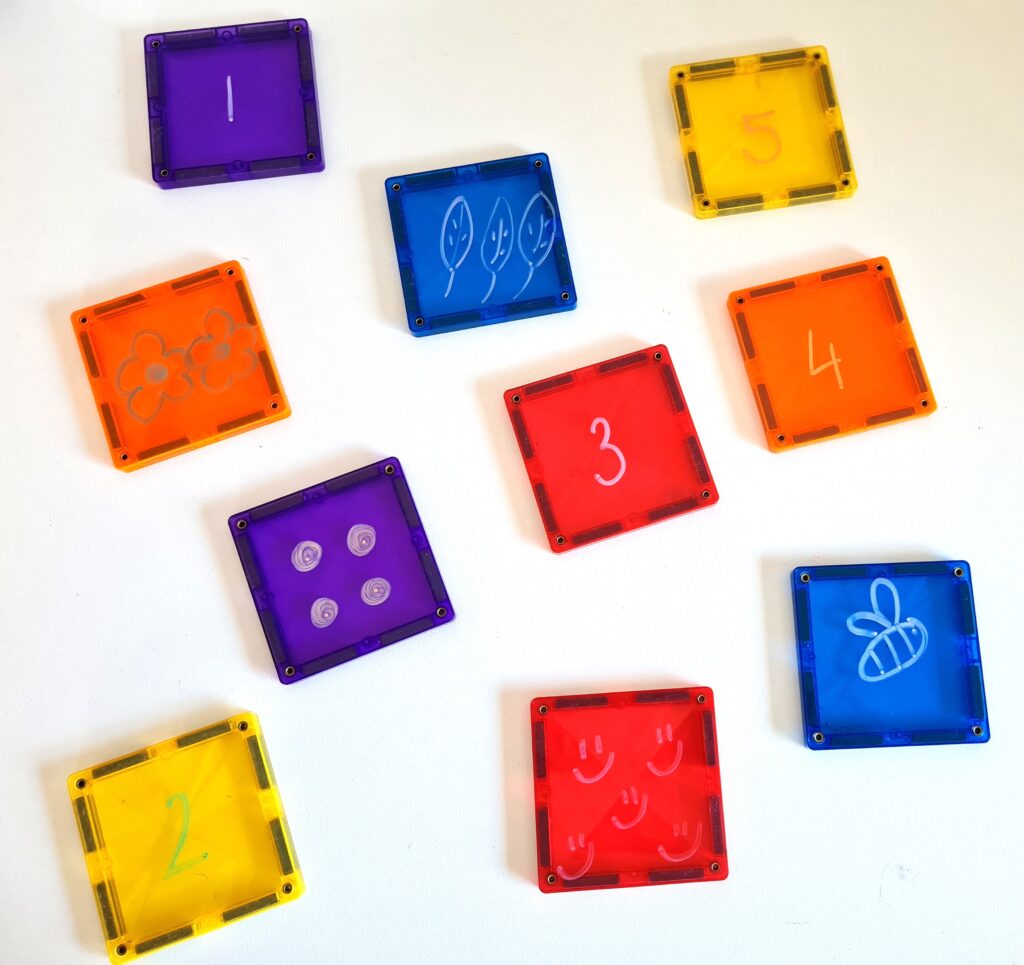
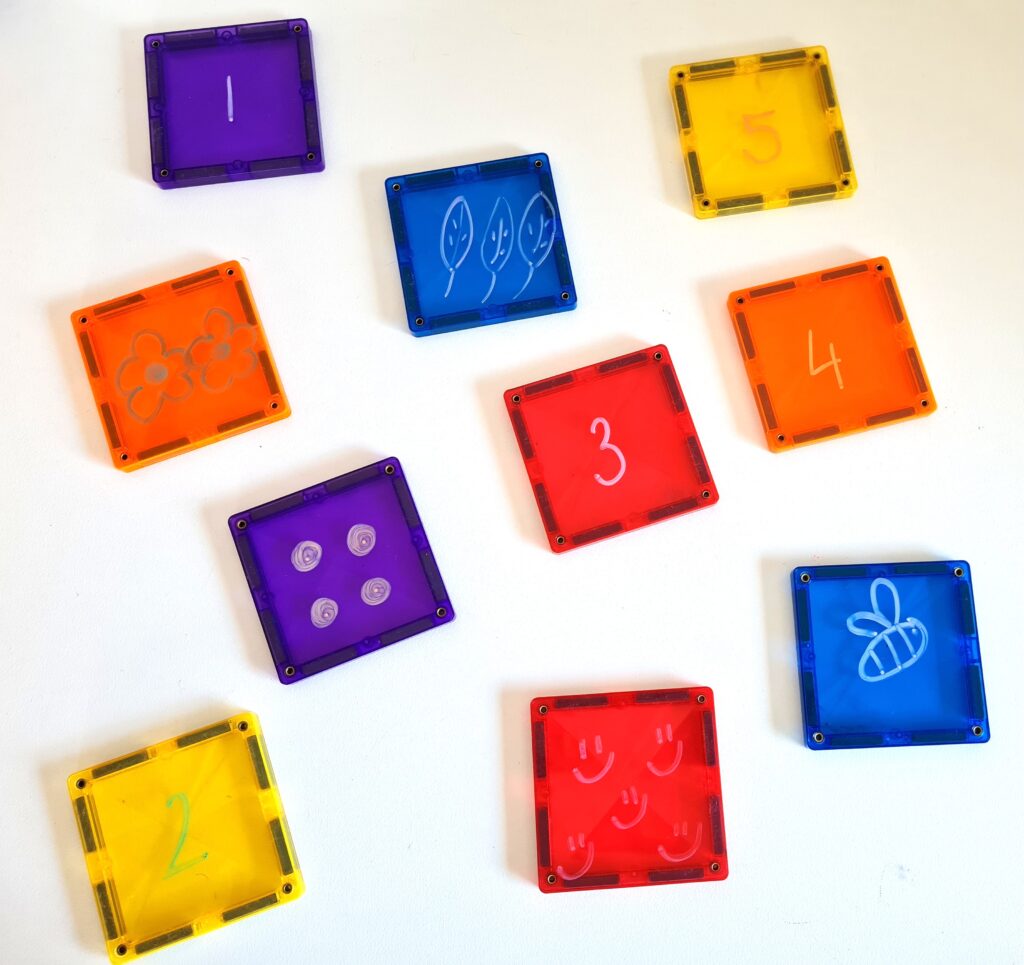
Use chalk markers to write different numbers on CONNETIX and create targets on the base plates. Children can throw beanbags to aim at those targets. At the end of each turn, add up the points of those targets that were hit. This can be modified for younger children e.g. for learning number recognition (children call out the numbers they hit).